

Author’s Note: Carol Agneessens and I have been exploring how to apply yielding to Rolfing® SI and Rolf Movement Integration since my first Rolf Movement training with Agneessens and Rebecca Carli in 1999. Please refer to the article “Yielding: Engaging Touch, Presence, and the Physiology of Wholeness” that Agneessens and I have published in this issue (page 10).
When working with a client who is sensitive to the pressure of touch – as in the case of rheumatoid arthritis, connective-tissue disease, osteoporosis, pregnancy etc. – the practitioner should touch her or him in a careful way. In traditional Chinese medicine, from the perspective of yin-yang wu xing thought, there are five zheng (syndromes or presentations). My acupuncturist said to me that one zheng of mine has a tendency to be in functional imbalance in the respiratory system; people with this presentation – roughly one-fifth of the population – have sensitive skin and a highly receptive sense to outside pressure stimuli. For people with this presentation, or such as the cases described here, it might not be helpful to use intense pressure as a tool for intervention from the point of view of the safety and effectiveness of our work. More indirect and interventions like movement or a motility-oriented or energetic approach would be helpful instead. ‘Yielding’ technique falls in this category.
Below I describing three case studies with severe symptoms that were improved using yielding incorporated into Rolfing® Structural Integration and Rolf Movement work. I discuss the use of yielding in each case, and then in broad strokes in the discussion after the case studies.
Case One – Client with an Injured Knee
This fifty-one year-old year female had a meniscus injury in her left knee due to playing tennis with a damaged knee ligament. Needless to say, she had severe chronic pain in the knee joint. She went to see doctors at five major hospitals; each, including an orthopedic and medical knee specialist, diagnosed that her knee would never be fixed, judging from x-rays and MRI analysis. One doctor recommended a knee replacement. Her range of motion in the injured knee was limited: flexion only up to 90° and less-than-full extension (in the supine position, there was a tennis-ball-sized space underneath the knee). She limped with every step because of the narrow range of motion. She began weightlifting to attempt to rehabilitate her knee, had frequent joint injections with hyaluronic acid, and resorted to taking an analgesic (Loxoprofen).
Intention and Intervention
My intention in working with this client was to increase space in the joints. As preparatory work, the other lordotic curves needed to decompress and yield into the massage table. (Hubert Godard uses the term ‘lordosis’ to describe the curves of the feet, knees, lumbar spine, cervical spine, and hands and their functional dynamic.) In this case, her cervical lordosis needed to be decompressed prior to work on the knee. When all the joints resonated coherently, it would be easier for the restricted or damaged joint to decompress, followed by it finding its natural position. Once this was achieved, the knee was educated to counterrotate; external rotation of the femur and internal rotation of tibia in flexion.1 This helped to lessen the pain in the knee joint. The five Rolf Movement sessions following the Ten Series helped her to keep length in the lumbars and the lordotic curves free from the compression pattern on the lower and upper back.
Results of the Work
After the sessions, the range of motion of the injured knee was improved. She recovered her ability to squat on her heels. Finally, the left knee could extend straight when she lay supine. I could observe her using her left knee in a similar way to her right knee in walking. She acquired the ability to descend stairs normally, and she was no longer reliant on Loxoprofen. Figure 1 shows her progress through our work together. Interestingly, after the work she was able to eat bell peppers for the first time in her life, which might mean some change of instinctual perception. Also, she gained confidence in herself since she is no longer reliant on regular acupuncture and massage treatments for her well-being.
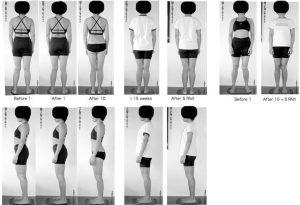
Figure 1: Before and after photos for Case One.
Case Two – Client with a Hip Replacement and Meniscus Removal
This sixty-five year-old female had chronic pain in her whole body from rheumatoid arthritis. She had her left hip replaced after the femur was fractured in a fall on a rainy day, and then the left meniscus was removed. Her doctor advised her not to over-abduct her left femur because of the risk of dislocation of the artificial hip joint, and worry about this led her to support that side with only the medial line. In Figure 2, the “Before” photo, you can see that she gets less support through her left leg. Her walking also looked unstable.
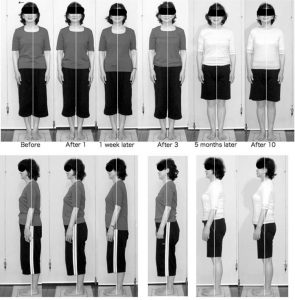
Figure 2: Before and after photos for Case Two.
Intention and Intervention
Starting in the first session, in supine position, yielding work allowed the body’s five lordotic curves to decompress internally, followed by a natural repositioning her hip joint. Since the client suffered from rheumatoid arthritis, I worked on her throughout the Rolfing series with quite a gentle touch, listening to and following her body’s motile response in safe surroundings. This is an example of a case where yielding work was the necessary approach for the client’s bodily condition. The Ten-Series work with this client was based on the series goals (in terms of function) but was entirely movement and yielding work, no tissue work. (This has become my style of work in my practice.)
Results of the Work
From her series, the client has gotten more support from her extremities and more core space. She reported feeling more vital. Her walk became more stable with contralateral movement. The photo labeled “1 week later” was taken before the Second Hour, and already we can see a differences from “After 1” as her body integrates the work; particularly, she has more horizontality in each diaphragm. There was about a five- month break between the Third Hour and Fourth Hour due to her schedule, yet the photo data clearly shows sustained balance during this break.
Case Three – Opening Lumbar Lordosis
This seven-year-old boy’s first session was shortly after his father passed away. His mother was concerned about stress caused by the loss of his father, as well as the possibility that he had suffered head trauma in what had been hard labor for his birth. Additionally, every winter he suffered from asthma. He presented with prominent lumber lordosis and no curvature in his neck (see Figure 3). His walk had no dimension side to side.
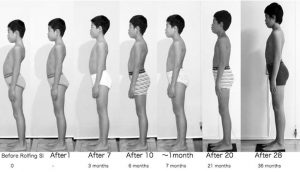
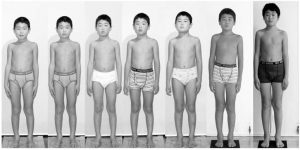
Figure 3: Before and after photos for Case Three.
Intention and Intervention
Yielding can be a very powerful tool for lordosis. The Ten Series work with this boy was again done using yielding and other Rolf Movement work, without any tissue work. After ten sessions, there was still potential for change in his cranium, where it might have been traumatized at birth. I suspect that this cranial issue may have affected the rest of the body – i.e., his spinal curvature – because the shape of the back of the cranium, as a kyphotic curve must be closely related to the five lordotic curves in the body. I thus felt that the head should be the focus of advanced sessions. Fortunately, his mother continued to bring him for work, so I could follow and see how he was changing over more sessions. My intention with his head was for him to regain his kinesphere by allowing his cranium to yield into my hands from all directions, thinking that it would help him to reach different directions.
Results of the Work
The photos in Figure 3 show clear structural changes, even though no tissue work was done. Through the course of the sessions, the cervical area developed more secondary curvature and dynamic followed by more horizontality in each diaphragm. Further, the client reported that his running performance improved (after the fifth session, he could overtaken the runner in first place in a relay race) as did his gymnastics score. Since receiving the sessions, he has gone through three winter seasons with no asthma attacks.
Discussion
The main issue in all three case studies was to enhance support. I paid attention to all joints in the lordosis patterning even when I was concerned with a particular joint or juncture. Yielding was beneficial here as it helps compressed areas to open and spontaneously develop more space. In each case, I was careful not to force change on a damaged area; I did this by avoiding use of intense pressure. With Cases One and Two, I allocated appropriate time for tracking between table work and standing to bring coordination in gravity. In all the cases, I feel it was key to provide a safe field for the client, which can facilitate change from within.
Yielding can be used in many situations, including pregnancy. In 2010, I held a Rolf Movement workshop with yielding, which one pregnant Rolfer attended as a student. In the nine weeks between her seventh month and full term she exchanged weekly yielding sessions with another student. She had no trouble giving and receiving the sessions and we were able to observe her body develop a more dynamic integration. On the second day after the workshop, her water broke, and two days later, right at high tide, she delivered her baby. To her the timing seemed in accordance with nature. This suggests that adopting yielding into one’s practice may benefit the practitioner as well as the pressure-sensitive client.
Endnotes
Case Studies with Yielding[:]