
Abstract
Kevin Kula is a KMI Structural Integrator, Fascial Stretch Therapist and holds five CrossFit certifications. Kevin is a serial entrepreneur, author, marketer, teacher (Stretch to Win) and business owner (Ready State Fitness). In January 2012, Kevin’s CrossFit Journal article, “Moving Beyond Muscle” was published describing the benefits of structural integration and Fascial Stretch Therapy™ for CrossFitters. He is publishing a book about his system of flexibility training, FlexibilityRx™, and a digital magazine. Contact him at [email protected] (www.FlexibilityRx.com).
The following case study examines the application of structural integration on a competitive athlete training in the sport of CrossFit. Melissa Einbinder reported knee and low-back pain after workouts and an inability to adopt a narrow stance squat. The results of a twelve session series of KMI Structural Integration combined with Fascial Stretch Therapy™ included better hip flexibility and knee tracking, more expansive breathing, and a greater ability to ground into the back of the body.
The ability to adopt a narrower squat and recruit musculature that was previously inhibited (hip flexors inhibiting gluteals) has improved. Strengthening exercises, time, and awareness are required for her to fully integrate the changes into her workouts and lifestyle.
If you have never witnessed the Sport of Fitness on ESPN3, you probably would be shocked to see over 10,000 spectators sitting at the edge of their seats, screaming at the top of their lungs at 115-pound women doing workouts consisting of twice bodyweight deadlifts, 50 pull-ups, handstand pushups, rope climbs, and Olympic lifts like the snatch. Serious competitors in the sport of CrossFit train at a high intensity in preparation for the yearly CrossFit games, which crowns the “Fittest Man and Woman on Earth.”
Background
CrossFit
CrossFit is an exercise program consisting of workouts comprised of constantly-varied, functional movements performed at a high intensity. CrossFit founder Greg Glassman explains that functional movements are defined not just by movements found in the gym, but by those found in everyday life: squatting, lunging, pushing, pulling, lifting, and running. These are natural movements that men and women have utilized throughout the course of human evolution. Characteristics include: the use of multiple joints, recruiting muscles from core to extremity, full range of motion, and efficient weight transfer of both the body and external objects (Glassman, 2012). CrossFit workouts are a constant variance of these functional movements based on the development of sound body mechanics and the progression of strength and athletic development.
Gym members participate in a group class that is directed by the Workout of the Day (WOD) which is written on a whiteboard in the gym. Workouts are timed and members attempt to finish the workout in the least amount of time or do the most amount of work in a given time frame. Everyone in the gym has different goals and training levels—the average gym member is not training for the CrossFit games. However, the competitive nature of workouts adds an element of fun and camaraderie that is often missing in the traditional gym environment. New gym members desire enough flexibility to safely perform the movements in the workout.
The intermediate gym member desires enough flexibility to complete the workouts as prescribed without having to scale weights and repetitions. The competitive CrossFit athlete is interested in optimal flexibility and range of motion for elite performance.
Posture and Movement
Gordan Hewes, in studying the anthropology of posture, points out that postural variations are culturally, not anatomically determined. In other words, there is no difference in human anatomy across cultures that warrants differences in postural norms. The curiosity behind working with CrossFit is that it reveals imbalances, not just in posture, but movements of everyday life. To quote Greg Glassman, “The squat is no more an invention of a coach or trainer than is the hiccup or sneeze. It is a vital, natural, functional, component of your being” (Glassman, 2002, p. 1).
While many trainers utilize the squat with their clients, CrossFit’s reliance on high-intensity during workouts adds an unprecedented metabolic and cardiorespiratory demand that exposes weaknesses that would otherwise go unnoticed. When someone is doing a CrossFit workout—like a timed, five rounds of a 400-meter run followed by 15 repetitions of 95 pound overhead squats—the ability to maintain her vertical line (or as CrossFit calls it, midline stabilization) will be put to the test. [This couplet workout consisting of running and squatting is called “Nancy.” Many CrossFit workouts are named after women. Glassman explains that the National Weather Service uses female names to describe storms and that “anything that leaves you flat on your back and incapacitated only to lure you back for more at a later date deserves naming,” hence workouts like Angie, Fran, Diane, and Nancy (Glassman, 2013, p. 5.)]
Practitioner – Kevin J. Kula
My background is in strength and conditioning and coaching CrossFit. Despite success improving movement patterns in clients, chronic imbalances persisted in many clients, which lead me to seek out training in KMI Structural Integration (SI) and then in Fascial Stretch Therapy. I now work exclusively with CrossFitters in Arizona as the director of the CrossFit Scottsdale Flexibility Program. I screen new members and offer sessions of SI in conjunction with teaching gym members how to develop a Personal Flexibility Plan centered on self-stretching. Both range of motion and flexibility are extremely important to continued success with CrossFit.
Client – Melissa Einbinder
In September 2012, I approached a member of CrossFit Scottsdale who competes in local CrossFit competitions. Melissa Einbinder was a gymnast of 13 years before discovering triathlons. However, a knee injury caused by the wear and tear of long- distance running left her immobile and looking for something new. Mel discovered CrossFit, which she used to rehabilitate her knee to where she could work out again. She currently works out four days a week to remain competitive. Her pattern is common in women who do CrossFit: an anterior shift of the hips relative to the femurs, anterior pelvic tilt, hyperextended knees, and a posteriorly tilted ribcage. Mel works as an engineer, is energetic, athletic, and highly motivated. I suspected her gymnastics background and her strong work ambition contributed to her pattern of a strong forward pelvic shift and tilt.
Mel complained of knee pain during squatting, and occasional low-back pain after weight-lifting. In a narrow squat stance her knees caved in and she was unable to maintain an upright torso. She compensated by taking a wider stance and turning her legs and feet out, as you can see in Figure 1.
Additionally, running, lunging, and box-jumps were limited by her ankle and knee flexibility. Her SI series lasted three months. One-hour sessions were scheduled once or twice a week with some off weeks due to her travel schedule.
Method
My application of structural integration is that of Tom Myers’ KMI 12- session series. I also integrate a therapy called Fascial Stretch Therapy (FST) where appropriate to address joint capsule range of motion and to globally affect long fascial lines through stretching, following the Anatomy Trains (Myers, 2001).
Personal Flexibility Assessment
All new clients are initially taken through a Personal Flexibility Assessment (PFA) that is a CrossFit specific adaptation of the PFA found in the Stretch to Win book (Frederick, 2006). The PFA is more than a typical intake form in that it also allows CrossFitters to understand their own limitations in relation to a self-stretching program. While CrossFitters are given session specific stretches during the series, I help them design a Personal Flexibility Plan based on the PFA after the series.
The PFA has three parts. The first component is a health history where I identify current pain and problems, and assess posture and skeletal alignment. The second component involves assessing passive and active range of motion. The third component is assessing the flexibility involved in sport-specific movements, in this case the squat and overhead squat, both of which are a focus of Melissa’s integration sessions.
Flexibility Proposal
After my initial client consultation I draft a three page Flexibility Proposal that includes the purpose, process, and payoff of structural integration. The proposal outlines the client’s goals, process, and measures of success. In Mel’s case, the three main pain problems and performance limitations were knee pain after workouts, occasional low-back pain, and the inability to comfortably progress in a narrow stance squat.
Ergonomics Evaluation
After the initial consultation or session with clients, I always ask for a photo of their workspace so that I can assist them in maintaining good posture throughout the day. I request two photos, one of the empty chair next to the desk and a second photo of them seated that shows the relationship to the monitor and their arms. I give clients a handout on office posture, and how it relates to performance and flexibility for CrossFit. Here are some examples:
1be Squat: requires weight on heels, vertical shin, and knee flexibility
? Avoid shoes with excessive heel or that are too narrow
? Maintain vertical shin when seated (note any tension in front of shin)
? Raise chair so hips are above knees
1be Deadlift: requires hamstring flexibility, neutral lumbar spine, and full hip extension
? Raise chair so hips are above knees to lengthen hamstrings
? Position your hips into the back of chair and avoid tucking hips (tail) under
? Lengthen spine; slouching shortens hip flexors which prevents full hip extension
Shoulder Press: requires midline-stabilization (keeping head in line with spine), a good ribcage position, and arm flexibility
? Move close enough to the monitor to avoid turtle neck (head forward posture)
? Lengthen spine when seated, leaning back into thoracic support if necessary
? Use seated bench-press analogy when at computer or driving: press shoulders back, externally rotate arms, and then relax arms down
Session Considerations
Some sessions were right after Mel’s workouts during the day, and many sessions were either early morning or very late at night. Having heavy metal playing in the background and the sound of people yelling and weights crashing down makes for interesting sessions. In fact, before I decided to work exclusively with CrossFitters, I protested to one of my business coaches that, “I can’t work in that environment!” It was not conducive to SI in my opinion. While I have a Phoenix office, my decision to work with CrossFitters in the gym (at CrossFit Scottsdale) has definitely paid off. I’ve found that SI benefits from adapting to the needs of target groups. While I focus on scheduling appointments during down times at the gym and in quieter areas, I realize that it is the responsibility of the practitioner to relate SI to the client’s goals, to engage the client, and to manage the arc of the sessions and series.
CrossFitters have the energy and adaptability to respond to the possibilities that SI provides. A difficulty with assessment—both visual and tactile— is that muscle tightness following workouts is common, which influences flexibility and posture. By treating the series as a process—along with looking at client photos as a set of questions, not answers—I take into account the effects of intense exercise on the progression and session-to-session changes during the series.
Session One: Supericial Front Line
Observations in session one included good muscle tone, lean body composition, and good energy for the series. Mel brought a lot of strengths into the series including adaptability, an open mind, curiosity, and a willingness to meet early in the morning and late at night due to her busy work schedule. My main observations during the first session were rigid abdominals, chest breathing, and tight quads. The default session format was applied going up the front with the intention of freeing tibialis anterior and the quadriceps relative to the forward shift of the hips.
I worked the abdominals while encouraging belly breathing before finishing with a hip flexor and quad stretch on each side.
Session Two: Supericial Back Line
The intention of session two, down the back, was to provide enough space for Mel to ground her weight into her heels. The myofasculature of the lower back line (plantar fascia, posterior ankle ligaments, and calves) was freed and dropped to create slack behind the lateral malleoli to the heel. The hamstrings were worked in relation to better knee tracking in the squat. I ended the session with back stripes (on the bench) and with a long and slow pelvic lift (on the table) taking the pelvis into a posterior tilt.
Session Three: Lateral Line
Assessment for the lateral line included a free hang from a pull-up bar in the gym. Mel displayed good side-to-side balance, but restrictions in the shoulder girdle were apparent from behind—the shoulders were elevated into the neck. The session focused on the septum between fibularus longus and soleus, spreading the lateral thigh, and spreading of the latissimus dorsi in relation to the posterior tilt of her ribcage. I approached the very tight and tender pectoralis minor with Mel seated on a bench with the arms hanging while she breathed into her chest. FST was applied to the lateral line including the glutei, quadratus lumborum (QL), and the entire lateral line up into the arms before tractioning each shoulder joint.
Session Four: The Spiral Line
Session four focused on addressing any restrictions in the spiral line that affected knee tracking. I addressed the short head of biceps femoris in side- lying before integrating knee tracking and examining gait.
I normally email three-page handouts to clients at the end of each session with the purpose of each session, awareness exercises, and stretches. I did not do this during this series. With the strong bow- string pattern affecting the entire body, I debated whether or how much I should point out with regard to awareness, not wanting to lead the witness and tell her how it was going to be. I wanted to see how much her anterior shift would lessen, as I reviewed the pictures between sessions, but it did not diminish with the first four sessions. Mel did report a greater ability to take a narrow stance during squatting but still had to externally rotate the legs and feet.
Session Five: The Deep Front Line (Lower)
I approached the core sessions with a curiosity since I determined the major restrictions were held more deeply in the core. In session five, I lifted the tissue of the anterior septum between the quads and adductors while dropping the tissue of the posterior septum between the adductors and hamstrings. This direction was in relation to the anterior pelvic tilt and anterior shift of the hips relative to the feet. The pelvic floor musculature was congruent with the positioning of the hips—high and tight. Breathing was encouraged (relating the respiratory and pelvic diaphragms) while I used the movement of posterior pelvic tilts to support the work along the septa and pelvic floor.
Session Six: The Deep Front Line (Upper)
In session six, I revisited the pelvic floor and focused my intention on the relationship between the psoas and the erectors. Iliacus and psoas were both bilaterally hypertonic. Slow, deep pressure was applied to QL in relation to hip tilt and the posterior tilt of the ribcage. Fuller diaphragmatic breathing was encouraged during the session, which also included work on the intercostals and lateral posterior ribcage fascia.
Session Seven: The Deep Back Line
Session seven revisited the territory of session two to further enable grounding into the back of the body at a deeper level of the lower leg and hamstrings. I treated the adductors and the joint capsule itself to address the lack of internal rotation of both femurs. The external rotators were revisited (I first addressed them in session two) with an emphasis of dropping the hips posteriorly. I also returned to the psoas and iliacus before finishing with spinal work on the erectors.
During session seven I went over Mel’s pattern with her and recommended that she lengthen her thoracic spine in standing and engage her gluteals and abdominals to tuck the tailbone under. I also had her explore setting up this position before squatting. Muscle testing revealed weak gluteals, which were inhibited by tight hip flexors. Psoas- erector imbalance and the impaired firing pattern of the gluteals were contributing to Mel’s inability to keep her torso up during the squat and creating sacral tension.
Session Eight: Head and Neck
At the beginning of session eight, I examined Mel’s seated position in her car to try to understand what was contributing to the hypertonic iliacus and psoas. She was using a lumbar support and it was apparent that the positioning of her seat was shortening her hip flexors. I advised a thoracic support instead to create length in the spine and had her move her seat forward so that she was not actively recruiting her hip flexors while driving. I also observed jaw tension, which was congruent with the tight pelvic floor and the problematic driving position. The default territory of session eight was covered including intra-oral and intra-nasal work after releasing any tension in the shoulders, neck, and jaw.
Session Nine: Lower Integration
Session nine was brief, both due to a re-examination of Mel’s car posture and the session needing to be cut short. I worked above and below the lower and upper legs with two hands encouraging proper ankle and knee tracking. I frequently had Mel get up and walk around before squatting narrow. I finished the session with knee tracking while I worked the ankle retinacula, lower leg compartments, and tendons behind the knee.
Session Ten: Upper Integration
While Mel’s squat improved with a narrower stance, sacral tension still existed going into session ten. I revisited her psoas and erector balance in relation to the ability of her torso to remain upright in the squat. Seated bench-work was performed to encourage the ability of the spine to adapt to better curvature. No major bends or rotations were noted in session seven, so here the focus was on easing the tensional pull of the erectors on the sacrum in squatting, and the posteriorly tilted ribcage. Due to the anterior tilt of the pelvis, I lengthened her latissimus bilaterally to allow freedom of movement of the arms in relation to the torso in the overhead squat.
At the end of session ten, I presented Mel with a personalized warm-up specific to her pattern with the intention of strengthening her gluteals, abdominals, lower spiral line, and increasing awareness of neutral pelvic tilt during movements. Due to Mel’s athleticism and strong muscle imbalances I determined that she would need a potent stimulus relative to her workouts that would enhance body awareness, flexibility, and muscle activation. The stretching and strengthening exercises selected were as follows:
? Two hip flexor stretches: seated and a lunge sequence
? Cat-cow (focusing on posterior pelvic tilt and stretching the erectors)
? Lateral-line stretch primarily for the QL in relation to pelvic tilt, as well as the tensor fasciae latae (TFL)
? Latissimus stretch: squatting with both arms up holding bands to traction shoulders
? A calf stretch and anterior ankle stretch to encourage grounding into heels
? Bulgarian split squat: active rectus femoris end- range stretch
? Resistance band exercises including an x-band walk (gluteal activation) and squats (enforcing knees out)
? Single leg Romanian deadlift with kettlebell: strengthening of gluteals and single leg movement including stabilization of the arch of the foot through the spiral line
? Leg-lifts and barbell rollouts to recruit abdominals and stabilize low back
? Barbell gluteal bridge and barbell hip thrusts to strengthen the gluteals
Session Eleven: The Arm Lines
Assessment included an examination of the front- rack position with a 45-pound barbell resting on the shoulders. The front-rack is the setup position for the shoulder press and the front-squat and requires flexibility in the thoracic spine, shoulder girdle, and arms. Freedom in the interosseus membrane to allow for forearm rotation is important. The main requirement of the front rack position (to support the barbell on the chest) is to flex the shoulder with a bent arm, then adduct and externally rotate the humerus.
At the beginning of the session, I had Mel place her left hand on her chest and her right hand on her abdomen. I cued her to breathe into her abdomen and feel her right hand rise with her breath. I then began the session with a lateral line stretch from the hip into the QL and latissimus. FST was applied in a supine position to the rhomboids, levator scapulae, pectoralis minor, biceps, and the rotator cuff before stretching the latissimus in a side-lying position. Traction was applied repeatedly between stretches to help mobilize the shoulder joint capsule which was biased towards internal rotation. I noted that additional work would be needed to improve scapular position and a deeper release into the neck before completing the session with a thoracic lift.
Session Twelve: Joints, Lines, and Empowerment
Session twelve brought awareness to each of the components holding Mel’s pattern in place—both hypertonic areas (psoas, quads, TFL, shins, calves) and weak areas (gluteals and abdominals). I began the session by stretching her low back and lateral line. I then had Mel do a few spinal roll-downs (seated on a bench) while I applied back stripes with both elbows. Next, I had Mel squat with a resistance band around the thighs (above the knees) to engage the gluteals while using the abdominals to maintain a neutral pelvic position. I wanted to emphasize proper positioning and challenge her in a narrower squat stance before softening and stretching each of the hypertonic areas.
I instructed Mel to focus on her breathing while softening the iliacus and psoas and stretching the quads before having her get up and notice how her squat changed. I then worked in relation to ankle mobility before stretching the calves. I had Mel hold the bottom position of the squat. With a band around her waist (pulling her forward) tied to a pole, she was able to lean back and ground into her heels. The remainder of the session included some final arm and neck work before ending with a thoracic and pelvic lift.
Results
During the series, Mel finished first place in two local CrossFit competitions. Mel also competed against two of the Fittest Women in the World in a major regional competition (SICest of the Southwest 2012). Benefits Mel experienced as a result of the series include:
? Fuller, more expansive breathing including better abdominal tone
? Improved hip flexor range of motion (quads) and decreased hyper-tonicity (iliacus/psoas)
? Lateral line support and flexibility including TFL, QL, and latissimus
? Improved range of motion in the hip joint, especially internal rotation
? More efficient knee tracking in movement
? Increased body awareness in relation to standing and work posture
? Development of a stretching and strengthening strategy relative to skeletal alignment
The ultimate goal of the series was improving Mel’s ability to squat. Her postural pattern and her inflexibility in a narrow squat were directly related to her knee and low-back pain after workouts. Her failure to stabilize her pelvis with her gluteals and abdominals in movements caused her to transmit load to her knees and low back. Internal rotation of the hip joint capsule is much improved, allowing her the flexibility to squat more narrowly with her knees out as you can see in Figure 2. There is still a need for stretching and strengthening.
It will take time for her to change her movement patterns to the point where she can stabilize her pelvis effectively during her workouts. The warm-up I gave her will help bring more awareness into her workouts. Her wide stance makes the squat easier and safer. But, to improve her fitness level and to eliminate any recurrence of low-back or knee pain, she will need to actively challenge herself in a narrow squat and other positions that are new to her.
I always reflect on the principles of SI during a series: energy, adaptability, support, release, and integration. Mel, like many CrossFitters, has good energy and adaptability. Her support has definitely improved through increased hip mobility, decreased hyper-tonicity, and better organization. It is still up to her to release old postural, movement, and nervous system patterns. Ida’s comment about the nervous system is relevant, “It’s relatively easy to get control of the myofascial system; it’s anything but simple to control the neural” (Rolf, 1990, p. 169). Mel’s driving posture, frequent airplane travel, and alignment in standing play a significant role in maintaining her pattern of overactive hip flexors and erectors. While all of those factors are under her control, her workouts themselves are the source of her aches and pains—not structural imbalances on their own.
I also consider the two separate but interconnected elements of a series: differentiation and integration.
Differentiation is more than the ability of muscles to function on their own or fascial layers to slide on one another. Differentiation applies to the new possibilities for movements. As Hubert Godard explains, “There is no lie in the body. If someone is moving only from the extrinsic side of the body, structurally they may look well organized, but if you are used to reading movement, there is no motility, by which I mean movement coming from the core, coming from the central line” (Newton, 1992, p. 43).
Discussion
If Ida was right, “Lines in a body are not mystical structures—they are where forces balance” (Rolf, 1990, p. 104), then helping CrossFitters find their line sets a solid and necessary foundation for athletic performance. Caryn McHose nicely describes the interplay between structure, gravity orientation, and movement:
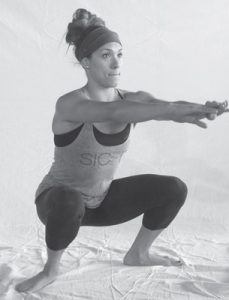
Figure 1. Mel’s squat before the structural integration series.
We consider gravity orientation as a background to perception and to movement. Gravity orientation is integrated into all of the elements of movement. To play with this sense of our orientation, to become aware of possible shifts in orientation, can help us move differently and may even help us find new solutions to relational problems (McHose, 2006, p. 12).
CrossFit mobility expert Kelly Starrett also stresses the importance of organizing movements. Once you are in a loaded position, all bets are off. Kelly correctly points out that the beginning position of a movement determines the end position. Many squats are improved simply by having CrossFitters find their line, grounding into the back of their body, and getting more organized in standing before squatting.
Organization and Strength
Jim Pascucci, an accomplished and experienced structural integrator, is the owner of Integral CrossFit in Colorado. He has developed an interesting model for understanding the interplay between tissue organization and tissue strength. He explains, I started doing CrossFit under my son’s coaching and when he went away to college I joined a CrossFit gym.
In December of 2009, my wife made a comment to me that she could see a big difference in me. Since I was doing CrossFit, my posture was better! …. !ree months after my wife started CrossFit, I noticed that her pronounced computer posture was resolving and she was able to hold her line (2011, pp. 2-3).
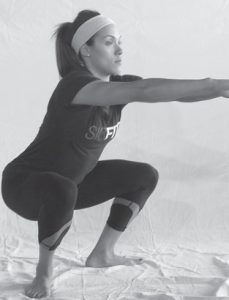
Figure 2. Mel’s squat after the structural integration series.
Jim observed that other CrossFit gym members who had never undergone SI would not improve their posture, “People got stronger, suppler, but their old pattern was still quite evident” (2011, p. 3). This is similar to my own personal experience, which I documented in my CrossFit Journal article, “Moving Beyond Muscle” (Kula, 2012). Jim characterized four patterns: supported restricted, supported unrestricted, unsupported restricted, and unsupported unrestricted. People with good alignment are unrestricted and people who are strong are supported. I found it interesting when speaking with Jim that he likes to have his clients develop strength first through three months of
CrossFit before having them undergo SI. There is no question that the two areas support and complement one another.
Conclusion
A great teacher and mentor of mine, Peter Ehlers, once commented that there are changes you can see and changes you can feel, and some that are yet to happen. If we were painters we would need every last brush stroke, but this work is like building a boat— once you push it out to sea, the currents will take over. Ida once commented that, “We are only on our way to being upright” (Rolf, 1990, p. 88). I myself struggled to integrate SI into my life, physically, mentally, and emotionally, but slowly, often without my awareness, the changes occurred. The art of this work is to look, listen, and guide our clients—gently but purposefully—applying the right intention, with the right touch, at the right time.
While SI is more of an art than a science, the exploration of posture and movement has no better playground than in the gym where bodyweight exercises and the forces of external object control (weight-lifting) can deepen the changes that SI produces. Workouts comprised of constantly-varied, high-intensity, functional movements are the perfect challenge for integration. Posture and movement, structural integration and CrossFit are two potent strategies for developing kinesthetic intelligence and spatial awareness.
Chris Frederick has put forth a new definition of flexibility, one that explains that flexibility is more than range of motion. After studying with Chris I have realized that flexibility is the freedom of personal expression. The true essence of flexibility is revealed in its relation to qualities like strength. Flexibility without strength is weak, strength without flexibility is rigid. Optimal strength development requires a mastery of adaptation to challenging demands. Flexibility is the personal expression of how someone responds to adversity.
Those who overcome the stressors found in and outside of the gym become strong and develop strength through flexibility. When the yin of flexibility and the yang of strength are harmonized, an athlete will display not only power, but also grace. Strong but yielding, adaptable yet rooted— when strength and flexibility are both cultivated in the gym a person’s fitness, emotional well-being, and personal growth will reach new potentials. Ida would agree that support is not something solid: “Your stability lies in appropriate relationships, and that is all” (Rolf, 1990, p. 85). CrossFitters require flexibility to set personal records in their workouts and structural integration definitely delivers.
References
Frederick, A., & Frederick, C. (2006). Stretch to win. Champaign, IL: Human Kinetics.
Glassman, G. (2013). Benchmark workouts. Retrived from http://www.crossfit.com/journal/library/13_03_ Benchmark_Workouts.pdf
Glassman, G. (2012). CrossFit training guide. Retrieved from http://library.crossfit.com/free/pdf/CFJ_ Seminars_TrainingGuide_112012.pdf
Glassman, G. (2002). Squat clinic. CrossFit Journal. Retrieved from http://journal.crossfit.com/2002/12/ squat-clinic-by-greg-glassman.tpl
Kula, K. (2012). Moving beyond muscle. CrossFit Journal. http://journal.crossfit.com/2012/01/moving-beyond- muscle.tpl
McHose, C., Frank, K., & Godard, H. (2006). How life moves: Explorations in meaning and body awareness. North Atlantic Books.
Myers, T. (2001). Anatomy trains. London: Elsevier. Newton, A. C. (1992). An interview with Hubert Godard.
Rolf Lines. 20(1), 42-48.
Pascucci, J. (2011). Rolfing and CrossFit. Integral CrossFit Newsletter. 12(11). Retrieved from http:// integralcrossfit.com/wp-content/uploads/2011/12/ CrossFit_helps_Rolf.pdf
Rolf, I.P. (1990). Rolfing and physical reality. Healing Arts Press.
[:]Benefits of Structural integration for CrossFit Athletes Competing in the “Sport of Fitness”