

Attempting to distill Jane Eliza Stark’s book Still’s Fascia: A Qualitative Investigation to Enrich the Meaning Behind Andrew Taylor Still’s Concept of Fascia (Jolandos Verlag, 2007) into a simple overview is like trying to paint the most elegant sunset with a one-color palette. Impossible! Stark’s book, which served as her graduate ‘thesis’ from The Canadian College of Osteopathy, is a masterpiece of rigor and research. It is also exquisitely referenced, leaving no ‘pebble’ unturned. There are 387 pages with double columns of print on each page. Additional material was omitted due to publishing considerations. Still’s Fascia is a work of superb magnitude. I have to admit that initially I was intimidated by the sheer volume of her inquiry. However, as I committed to its reading, Stark’s writing imbued Dr. Andrew Taylor Still (the founder of osteopathy) with a multidimensional reality before my eyes. His brilliance, fortitude, and commitment to discovering natural approaches to wellness are a story to be revered.
Volume 1 of the book is a thorough tome on the life and thinking of Still (see Figure 1). Initially, Stark delves into the essential character of Still. She identifies four essential traits: purpose-ness, human-ness, cognitionness, and spiritual-ness. Yet, Still’s essence goes “deeper than these characteristics . . . the Still-ness of Andrew Taylor Still” (Stark 2007, 58).
Still’s life and early practice as a physician on the bloodied fields of the Civil War, his devotion to extensive study and learning of medicine, his life and learning with the Shawnee Indians as a young boy, his involvement with the Masons and spiritualism, and his pull to treat the whole person are all part of the initial image Stark conveys. He was an exceptional individual possessing a relentless drive to understand the complexity and vitalism of living systems. In spite of criticism from the medical profession, poverty, being run out of towns for his beliefs and practices, as well as horrific familial losses, he carried on.
One of Still’s initial writings dealt with the interconnectedness of bones and the functioning of the body as a whole. This intellectual orientation to the nature of ‘wholeness’ appears to have been influenced by the writings of Emmanuel Swedenborg on spiritualism, fascia, and membranes. However, Still’s work with fascia was not limited to the writings of the day but garnered through hands-on dissection of the animals he gutted and studied in the wilds. Not only does Stark review Still’s concepts of fascia, she also identifies a precise chronology of his writing, revealing the evolution of his thinking about fascia as essential tissue that places it well within the philosophy and practice of osteopathy. Through this unremitting pursuit emerges Still’s understanding that no system works in isolation from fascia.
Although Still does not write exclusively on fascia, it was the framework, the matrix in which all of Still’s ideas of the body’s physiological processes of conception, growth, birth, construction, demolition, and of death took place. Further it was evident that in Still’s view of the functioning of the human body, no part of the body held more importance than any other part (Stark 2007, 127).
Still’s instinctual knowledge of the body as a complex system was revolutionary for the time. Although not naming ‘complexity’ in his theories, he noted that fascia with its interconnectedness to all other systems of the body, including the environment, defined what today we would call a ‘complex system’. Essential to the functioning of a complex system is the harmony brought by unobstructed flow.
Stark (2007, 127) highlights five ‘governing laws’ in Still’s writing; he believed these were immutable laws of nature, given by the creator:
• “the connected oneness of the fascia
• the dynamic flow of fluids through and within the fascia
• a force that was responsible or driving the fluids
• feedback systems to monitor the fluid flow
• a mechanism to alter the flow”
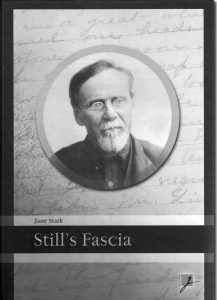
Figure 1: A.T. Still from the cover of Jane Stark’s book Still’s Fascia. Printed with permission of the publisher, Jolandos Verlag.
For Still, the symptoms that an individual presented allowed him to apply specific mechanistic adjustments allowing the vitalistic life force to flow. He felt the key was to create harmony, particularly through the unobstructed movement of the fluids. He wrote: “What is harmony but health . . . It [health] takes perfect harmony of every nerve, vein and artery in all parts of the body” (Stark 2007, 128).
Although fascia has been the darling of groundbreaking research over the past few decades, I appreciated threading through the early discovery of its function in health according to its pioneer investigator. Still wrote about the universality of fascia and discussed it in connection with both the plant kingdom and animals; for example, “The life of the living tree is in the bark and superficial fascia . . . and the life force acted through the fascia of man and beast” (Stark 2007, 133).
Throughout Stark’s book, there are charts in which she clarifies elements of Still’s understandings with regard to various qualities, manifestations, and osteopathic approaches. An example is her Table XI, Still’s view of Man (see Figure 2).
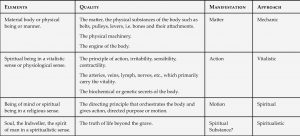
Table XI. Still’s View of Man: Elements, Qualities, Manifestations, and Osteopathic Approaches
Figure 2: Still’s view of Man (Table XI from Stark 2007, 135). Reprinted with permission.
The carryover for me into a Rolfing Structural Integration (SI) practice is in the ability to hold all the elements of complex systems and dimensions of man within a session. Stark also investigates Still’s concepts according to mechanistic, vitalistic, and spiritual views. These aspects were native to working with the complex systems of man. In reading both quotes and the research synopsis of Still, familiar understandings from Rolfing training are linked to their origin. In 1897, Still was describing fascia as a “kind of lubricant, which together with synovial membranes, permitted one muscle to glide over, under or around others and not irritate the harmony by friction” (Stark 2007, 138). Sound familiar?
Throughout chapter four: “Concerning Fascia,” Stark elaborates on the three views Still held about fascia: mechanistic, vitalistic, and spiritualistic. With each view she researched the evolution of his thinking and cites applicable quotes that showed the shift as Still’s understanding progressed.
According to Still’s mechanistic view, all complex systems must have structural characteristics. Fascia as understood by Still was matter, material and tangible (Stark 2007, 138). Still recognized that fascia functioned primarily as a medium or conduit for the passage of nerves, vessels, blood, lymph, and glands. He also recognized fascia as the interface with the environment.
His vitalistic orientation cited the elements of “life force, magnetic or electric flow, cerebrospinal fluid, brain fluid, lymph chyle, pancreatic juice, acids, alkalies, oils . . . lubricants and solvents” (Stark 2007, 139). His vitalistic view again cites the harmony of flow to be essential to health in complex systems.
Stark (2007, 140) cites the following five quotes as exemplary of Still’s vitalistic orientation:
• “In the fascia is all the soothing and vital qualities of Nature.”
• “It gives nourishment to all parts of the body.”
• “We think we prove conception, growth, and causes of all diseases to be in the fascia.”
• “By its action we live, and by its failure we shrink, or swell or die.”
• “But the fascia is the ground in which all causes of death do the destruction of life.”
Still’s spiritualistic view emerged from both his Christian orientation as well as his interest in the Spiritualism movement that gained popularity in the nineteenth century. Stark details the meaning behind his spiritualistic orientation, showing that Still believed in a life force as a principle that was imparted to man by a supreme being – God. For him, “fascia seemed to be the union of the spiritual with material. This idea was carried one step further adding the idea that the mind with a lowercase ‘m’, which was the portion of the Mind of God, was the necessary connecting link between the body and the spirit – or motion in a vitalistic sense. Thus the statement, ‘the soul of man with all the streams of pure living water seems to dwell in the fascia of his body’, represented the union of body, motion (or spirit) with mind, Still’s triune nature of the body” (Stark 2007, 156).
Stark (2007, 153) cites a number of quotes that illustrate Still’s deep devotion, spiritual beliefs, and reverence to a Creator – God and Nature. Here are a few chosen words:
“That powerful life force that is bequeathed to man and all other beings, and acts through the fascia of man and beast.”
“It [the fascia] is the house of God, the dwelling place of the Infinite so far as man is concerned.”
“[Life] . . . the highest known principle sent forth by nature to vivify, construct and govern all beings it is expected to be the indweller and operator, and one of the greatest perceivable and universal laws of nature.”
Stark concludes Volume 1 of her book with a reminder to the reader that although Still was well read with regard to the study of medicine and physiology, he “credited no scholars or texts for his ideas but rather his introduction to fascia came through observation. As a young boy, he hunted, dressed, skinned and butchered animals for hides and food. With no books to guide him, it was proposed that Still did not strip away the fascia in order to reveal the underlying organs, muscles and vessels . . . instead he was exposed to fascia and membranes in their most natural state, shortly after death” (Stark 2007, 164).
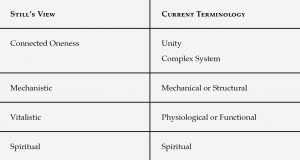
Table XIII. Still’s View of the Body and Current Terminology
Figure 3: Still’s views of the body and current terminology (Table XIII from Stark 2007, 169). Reprinted with permission.
The preceding overview has focused on Volume 1 of Stark’s published thesis. Volume 2 records questions and conversations with osteopaths regarding their understanding and application of ‘Still’s fascia’ in their modern osteopathic practice. Similarly well researched and reported, she conducted thirty-seven interviews addressing the question: “How are Andrew Taylor Still’s concepts of fascia understood, in particular his philosophical and spiritual concepts, and utilized in a manual based practice by experienced Osteopaths?” (Stark 2007, 169). Figure 3 shows the expert manner in which she delineates Still’s view with current terminology.
In drawing conclusions, Stark recognized that an exact fit between Still’s views and modern osteopathic thinking could not be made in a one-to-one comparison. Because of advances in physiological understanding in the past century, many of the vitalistic views can now be explained. She also found that current interpretations – such as fascia being holographic, or that it holds memories – could not be placed in one of Still’s three assessments.
I found Stark’s questions and the responses she collated provided a thorough exploration into the orientation, treatment, and understanding of the osteopathic community. Her questions are relevant to contemporary research on fascia and the manner in which Rolfers™ view and engage it. Some of the questions she posed could ignite a fruitful conversation within our community. For example: • “What does assessing the fascia tell you?”
• “How do you know when you are touching the fascia?”
• “What does healthy fascia feel like?”
• “How do you perceive fascia?”
• “Have you found that all your patients need fascial treatment?”
• “What is your goal when you treat fascia?”
• “How do you know when you have been successful?”
• “What do you feel is the relationship between fascia and vitality?”
Based on this extensive interviewing, Stark summarizes the responses of each osteopath. She also inquired as to their current understanding and reading of Still’s ideas with the question: “Have you continued to read his writings or study his work?” (Stark 2007, 176). This question could easily be asked of practitioners in our community: Do you read Dr. Rolf’s words?
Conclusion
My attempt to write an overview of Still’s Fascia that imparts well-deserved accolades and tribute to the brilliance of Stark’s inquiry has inevitably fallen short. However intricate and time-bound the reading of her thesis was for me, it was a revelation of the root and origin of some of Rolf’s ideas. I came away with a fuller understanding of the mind of Still, who investigated and lived by an understanding of fascia’s multidimensionality as a dynamic element in the health of man. Rolf contributed greatly to this understanding as she brought forward the work of Rolfing SI into the human potential movement of the 1960s and 1970s, highlighting uprightness in the field of gravity through engaging this mindblowing fascial network.
Carol A. Agneessens, MS began her study at the Rolf Institute® in 1981. Since then she has cultivated a life-long inquiry into the nature of the body and its multi-dimensionality. Over the past fifteen years she has been exploring the field of human embryology and the movement of formation. As a member of the Rolf Institute faculty since 1993, she weaves the understanding of these formative processes into her classes. Carol also teaches courses in biodynamic craniosacral therapy.
Bibliography
Stark, J. 2007. Still’s Fascia: A Qualitative Investigation to Enrich the Meaning Behind Andrew Taylor Still’s Concept of Fascia. Pähl, Germany: Jolandos Verlag. [Editor’s note: Jolandos Verlag is continuing to print a German edition of this book; an English edition should be forthcoming in the U.S., please contact [email protected] for more information if interested.] Stark, J. 2013. “A.T. Still’s Fascia.”
Lecture at Hidden Treasure Research Conference at Sutherland Cranial College of Osteopathy. Video available for viewing at www.youtube.com/watch?v=SLD7gm_xT84.