

Note from Anne Hoff: This completes my interview with Sally Klemm. Earlier parts of the interview were published in the June 2017 issue (“Explorations of Earth and Sky”) and the December 2017 issue (“Working Women”).
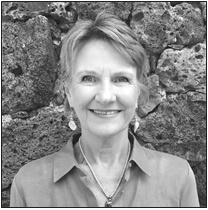
Sally Klemm
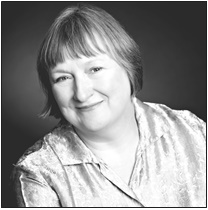
Anne Hoff: You had a long sabbatical from teaching Rolfing® Structural Integration (SI), from 2013 to 2016. Would you be willing to share what brought that about and how the experience changed and informs you?
Sally Klemm: Sure. I had a near death experience and everything changed for me. In 2012 I’d done workshops in Switzerland and then did a Basic Rolfing training in Malaysia. After the two months teaching in Kuala Lumpur, I needed to get out of the city and reconnect with nature. I planned a layover in Seoul at the Zen Dance Temple because of the nearby hiking trails. I’d been there before in the spring, but now the verdant blossoms had given way to hot, dry terrain. On the first day a jolt like a shock from an electric fence zapped me. I wheeled around to see a hornets’ nest. Uh oh, I didn’t have my EpiPen®! I was being stung again and again. I went into and an altered state way beyond any meditation or drug experience I’ve ever had. Pure sensation. No thought, no feeling, and no sense of time. The venom coursed through my system with such exquisite sensation that my palms and soles lit up like neon. Somehow I stumbled back toward my room hardly aware that I was going into shock. My lurching gait alerted the dog and hostess of my return, but I was passing out by the time I reached the door. I do remember sliding down onto the floor as she managed to find, uncap, and hand me the EpiPen – although she balked at the task of injecting me. Swinging blindly, I landed the dose as I was fading into black. I felt like Uma Thurman’s character in the overdose scene in Quentin Taratino’s Pulp Fiction. My blood pressure skyrocketed, my skin was covered in hot welts, hives, and my heart thumped like a jackhammer.
I’m still processing this experience five plus years later. I’ve always identified myself as a robust, resilient person. The EpiPen brought me back from the brink and saved my life, but it also significantly de- regulated my nervous system in the process. Instead of a quick bounce back to what I considered ‘normal’, I began to contend with the disruption to my autonomic nervous system and to my immune system being compromised.
AH: Wow. I knew the sketch outline of this but not the whole story. How frightening. So in terms of integrating the experience, was it a process of re-regulating your nervous system and sort of landing back in your body? Was that ‘landing’ different? Do you feel, in a sense, that you’re a different person?
SK: I do feel, in a sense, that I’m a different person. Especially in terms of my autonomic nervous system. It’s taken me a long time to bring down the sympathetic charge that was the aftermath of the norepinephrine. You know that quote “In theory, theory and practice are the same, but in practice they’re quite different”? I think this is relevant to the portraying of the basic Ten Series to beginning Rolfers: there’s the theory of Rolfing SI and a certain rhetoric that surrounds it, and then there are the people that come into the training more because they have had an actual lived experience of the work. And it’s the personal experience of the work that is often awkward at best to put it into words.
Anne, this hearkens back to an aspect of the work that you brought up when we were talking about your idea for an issue of the Journal about consciousness, including the theme of presence – being present in the moment, for the experience, and how that differs from our concepts about time or life; what we believe to be so, what’s actually lived. That goes a long way with my attraction to and appreciation for the phenomenal world.
It’s been my experience over the years, both in terms of meditation and Rolfing experience, that embodiment is an ongoing project. It isn’t a goal that we achieve or a destination where we arrive so much as an ongoing experience that continues to shift, change, and morph from moment to moment. It’s one of those paradoxes that we talk about Rolfing SI as if we’re about accomplishing this end: integration. And yet the ongoing experience of what that means, or what that entails, let’s say, again changes from moment to moment. It seems we’re juggling this moment in time and space with all of our technology and the emphasis on quickness and speed and results and how to retain our connections with gravity and ground.
AH: I’ve always noticed a quality of presence in your work.
SK: Presence and perception are big. I mean, I can only use my perception, but I encourage people to find out how they perceive things.
AH: How do you perceive things, Sally? For example, the session you did on me the other day – I’m still working with that piece you ended with. It’s actually quite profound right now. We worked with my feet and calves, but we ended with this tracking piece of really finding the space in front of my spine. That’s something I’ve ‘known’ for years, that we commonly talk about in Rolfing SI, and that I use it with my clients. But something about the way you brought it in, I’m relating to it and working with it in a whole different way. The time was right for it to land in a new way, be embodied differently. Perceptually, what led you there in that session, that you knew it was an important piece? We all do this all the time with our clients, make choices to bring in certain things, but we don’t often articulate the process of how we each do that, how we perceive what is needed. Do you see things? Do you feel things? Do you just know things? Do you have intuitive insights?
SK: Thank you for your expressions, Anne. My guess is the depth arises from of our mutual participation. We were both in the session and present with the work; a little bit like jazz improvisation. We begin to work together and have this sense of where it could go. I don’t have any pat formula that I use.
If anything, I might take a moment to ground and center myself prior and subsequent to connecting with a client. I emphasize this in my trainings, as it’s palpable and perceivable when someone is there, present, and when someone is not. If not, it only takes a moment to bring that to awareness and to step back and say, “Okay let’s reconnect here,” and then go back into the session. To give people permission and space to do that at the beginning can soften the edge and allow us to ease into work we’re participating in rather than doing something on another or trying to get the tissue to bend to our will, so to speak.
The sense of presence has been important to me in my own learning process. Earlier in the interview (see “Explorations of Earth and Sky” in the June 2017 issue), you mentioned my work as an instructor at the tables. I may not be the top presenter in our field, however I am skilled at supervision of work at the tables on an individual hands- on basis. This skill has value for me and is one I particularly look for in the assistants that I work with.
AH: So when you’re teaching, sometimes a student will call you over and ask for assistance. How do you sense how to help that person, how to enter into the jazz improvisation with the student? There’s something so seamless in how you do it. It’s not, “Well, let me show you how to do this!” I’ve never experienced you that way. There’s some way that you ‘loop’ with a person, that you kind of find out where he or she is coming from, that seems to be done very nonverbally. Maybe there’s some words included, but it’s not a big head-centered thing of, “Well, what are you having trouble with?” Yet you hone in and then offer something very attuned to the person. Are you able to take the process apart at all and speak to what you’re doing?
SK: I think so. Here’s a piece of that: In Basic Training, when I’m with students over a seven-week period, I track the process through student feedback on a weekly basis. They articulate their process in terms of what works and what doesn’t work for them: the edge where they find it, how that comes up for them and where, so that they can begin to identify it for themselves. There’s a lot going on during the Basic Training; it’s difficult at the onset to distill and organize the experience. In my own life, participation in an ongoing discussion group for over ten years has helped me to track process like that. Tarthang Tulku’s text Time, Space, and Knowledge contains exercises designed to provide an experience of how we might perceive our world in a new and fresh way, different from our habitual bias and perspective.
To comment on experience can be edgy. As challenging as it may be to describe an experience, reading about it is not the same as having it. Experience happens in the present, moment to moment. There is also something to be said for articulating and describing the nature of one’s own experience in order to communicate, share it with others, to hear it within the group so that we can recognize and appreciate how different it is for every individual. I think that in terms of Rolfing SI each practitioner develops his or her own style according to how the person experiences the work of giving and receiving. Yeah. There’s something about that. Maybe I’m not articulating it well.
Once the work begins, it’s more of a level playing field. I kind of shy away from hierarchical relationship, “I’m going impose order on you” or “I’m going teach you how to do it to someone else.” I always ask permission to enter in, and I think that’s helpful. You know, “May I make a suggestion?”
But in terms of learning itself and perception, it’s said that all learning begins with perception. It behooves us to know how we perceive our world and how we put it together. Because that’s much of how we form ourselves, right? And in terms of embodying the world that we perceive, it can have some great implications in how we embody or concretize ourselves. I highly value the attempt to see things from different perspectives. Otherwise the tendency to objectify is too great, and leads to projection. I don’t like it when other people do it to me, and I would like to do it less to others.
AH: It’s interesting what you bring up, the way perception is concretized. Effectively, from the psychobiological taxonomy, when we’re working with a client’s body, we’re really working with his or her whole worldview concretized into a body. How do we engage that in a way that respects that worldview? In a sense, if we are trying to change somebody’s body, we are trying to change his or her world. Clients come to us wanting change of some type, but sometimes they want to change their body but not the way they perceive the world or perceive their job or their boss or their relationship.
SK: Hmm, in retrospect ‘incorporate’ would be a less rigid word choice than ‘concretize’. Basically we have to get around ourselves and our yearning for certainty
AH: So it’s basically a conundrum?
SK: What your calling conundrum can also be considered paradox.
AH: So I want to go back to how I see you engage with clients. Another way of saying it is that it feels like you have a very skillful way of engaging the person’s body to also engage his or her worldview and give it a little more ‘breathing room’ rather than directly challenging it.
SK: That’s it! “Give it a little more breathing room.” I love that you said that! So much is happening moment to moment all around us; I like to ‘Keep It Sweetly Simple’ (my version of ‘KISS’) in order to not provoke overwhelm. I regard the client and consider what is being asked for: more space (i.e., what we call ‘gravity’) or more support (what we call ‘ground’). This gives me a place to start Something that I’ve come to appreciate more recently is how we are conditioned by the world that we occupy. It may not be a consensual reality, but it does influence us particularly in terms of the technology of the past thirty years that has a huge impact on how we are in our world – and how we learn. I’ve had the great good fortune to have wise teachers and mentors who don’t ascribe to the notion that learning is arduous. There are so many pressures around education today, whether it’s in public school, private school, the Rolf Institute®, etc. I think this stress negates something inherent in our being that enjoys – in fact, thrives on – learning. This fits with embodiment. There’s a yearning, not necessarily for information, but for experience. An innate curiosity about what being alive in a body feels like rather than being degree- or certificate-oriented.
AH: Yes! It’s making me think that there’s a way that the world we’ve created, particularly the industrial world and even more the technological world, is in some ways shaping our bodies more than the world of the past. I remember learning in anthropology classes how each ‘advance’ in our physical reality, from being hunter- gatherers to being agriculturalists to being factory workers, has resulted in less free time – more hours per day required to work toward survival, rather than rest, play, just be. And I think we could extend that to say that each ‘advance’ has also imposed more limitations on how we use our bodies during that work time, more shaping of our bodies around particular activities. As a hunter-gatherer you’d have a certain range and freedom of movement that was diminished by settling and practicing agriculture, yet agricultural work (in the past at least) would involve more varied activity season to season, and probably also day to day, than would factory-line work. And now, with workers in the technology sector – or people whose recreation is computer-based – we see so many people shaped even more by what they do all day. There’s a fixed shaping to checking our mobile phones, working on our laptops, and watching television, gaming, or surfing the web that is much more restricted than the multidimensional and varied shaping that would come from roaming through the forest picking berries or searching for game. Even our physical culture of how people exercise has become very shaped: the linearity of a treadmill or elliptical machine, even a Pilates reformer. Most people don’t question this.
There is beginning to be more recognition of this, particularly in the fitness and conditioning realm, the movement away from gym environments and into the natural world, using nature as our gym – uneven and dynamic surfaces to interact with. But then at work people are still very restricted; even if they have a sit-stand desk or a treadmill desk, it’s still very patterned. So as I see it, our bodies are subject to the world we’ve created in a way that they never were before.
SK: We’re influenced and shaped by the increasingly digital world we find ourselves in; there is also a hunger to be in the natural world. I know in my own life it’s become increasingly important for me to do activities outside when I can. I’ve been practicing tai chi and chi gung on a weekly basis for a long time, and I’ve recently stepped it up from once or twice a week to a more daily basis. I’m fortunate to live in Hawaii, where I do these practices outdoors. I’m more inclined than ever to go do an hour of chi gung and tai chi in the park three or four times a week than to go inside a gym. I do recognize that we have to make more of a concerted effort to be in nature. Yeah, I think about that a lot in terms of our precious planet and the phenomenal world and how much our natural world has to inform us.
Anne, this brings me back to when you asked me about culture (see “Working Women” in the December 2017 issue). I’ve been a resident of Hawaii during my entire practice. Access to the Hawaiian culture over the past thirty-two years has greatly influenced and impacted my work. I’ve been fortunate to be able to study with different kahuna and kapuna and kumus.
AH: You’re going to have to define those for our readers.
SK: Okay. Let’s see. I’ve been fortunate enough to study with Hawaiian teachers of the Hawaiian healing arts. Kahuna means ‘master’, kumu means ‘teacher’, and kapuna means ‘elder’. I’ve had access to all of those, and unfortunately many of them have passed now. Coincidentally, I was able to attend Emmett Hutchins’s memorial on Kauai, and when I go back to Kauai I’ll attend the memorial for a Hawaiian woman that I worked with closely for a number of years, probably close to thirty years, who just passed.
You had mentioned in that earlier part of our conversation how there’s a feminine aspect to the Hawaiian Islands energy that is very soothing. I appreciate that I’ve been able to follow in the footsteps of a female practitioner and Rolfing instructor, Stacey Mills. That’s been invaluable to me. Not that I am necessarily the embodiment of the feminine or anything, but I know I am in a woman’s body. And from an early age I was drawn to other cultures. I was drawn to be in the world and of the world. I mentioned when we started our interview (“Explorations of Earth ad Sky” in the June 2017 issue) that I was able to be an exchange student at seventeen and that was a first glimpse and taste for how other cultures see things differently.
AH: And therefore hold their bodies differently.
SK: Yes, even in our own country that’s true. In general people from the West Coast carry themselves differently than those from the East Coast, the Third Coast (i.e., Midwest), and those from the South, etc.
AH: Thank you, Sally, I’ve loved this exploration with you.
Advanced Rolfing Instructor Sally Klemm sought out her initial Ten Series as closure to a four-year stint crewing charter yachts around the world. Encouraged by her Rolfer Stacey Mills, Sally enrolled in the first Foundations course taught at the Rolf Institute® in 1985. That same year Jim Asher was her first craniosacral Instructor and Jan H. Sultan her first Rolfing Instructor. Since joining the Rolf Institute Faculty in 1995, Sally continues to teach both Rolfing and craniosacral work internationally. Her teaching style attempts to support each student in his or her unique ways of learning both the theoretical material and the development of personal experience. Her private practice is based in Honolulu (Oahu) and Kapa’a (Kauai) in the Hawaiian Islands.
Anne Hoff is a Certified Advanced Rolfer with a practice in Seattle, Washington that incudes Rolfing SI, craniosacral and visceral work, and nerve work. She is also a teacher of the Diamond Approach®, a modern path of consciousness work that supports embodiment and the exploration of who and what we are. As a Diamond Approach teacher, she works with private students both in person in Seattle and by Skype and offers classes and workshops. Her websites are www.WholeBodyIntegration.com for bodywork and www.InnerWorkForOurTimes.com for Diamond Approach work.
Presence, Perception, and Embodiment[:]