

Some time ago, you mentioned to me some old books you found discussing a way of working with nerves and arteries that was not in the osteopathic tradition. Can you tell us about this?
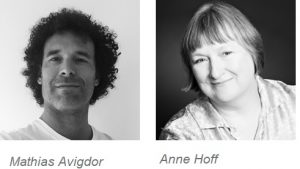
Mathias Avigdor:
Felix Kersten was the author’s name. Ever heard of him?
AH: No, never.
MA: Intrigued about him and about his work, I had been somehow following his ‘trail’ for a few years and had lost track at some point, when his remaining son, living in Sweden, wrote back to me. He confirmed that he never received work from his father and that all who did were certainly dead now.
AH: How disappointing. What’s the story of that, was there really no trace?
MA: I remember well this night in the summer of 2015 when I finally found a trace of his son, Arno Kersten.
I had been searching for a while. I was ready to call the publisher of [Arno Kersten’s] book Le Dernier des Justes, which describes how his father [Felix Kersten] devised and applied a plan to save Jewish people and others persecuted during World War II. I did not manage to find the son’s address: he seems to protect his privacy very well. I first thought I could ask the television network, since he appeared in a short interview in a documentary made by Swiss television some years ago. I asked a journalist working there to help me find the contact info, but we found no clues. Arno Kersten seemed difficult to find.
But this night that I mention, I found a transcription of a radio program mentioning him. It gave the name of the village where the journalist visited him. From there it was easy to find his name in the address book of the area. He lives in a little village in Sweden, not too far from the capital. The trip would be easy for us from Switzerland. Was he still alive? The interview I had found on the Internet was only two years old. I though, “Yes, maybe he was alive after all. He must know, I’m sure he does. It’s his father after all, he must know.”
We wrote a letter, my friend Urs and I. Urs would be ready to accompany me to Sweden if we had a chance to meet with Arno Kersten.
Yverdon, April 15, 2015 Dear M. Arno Kersten
We are making a research on the history of manual therapy and we are particularly interested in the therapy your father Felix Kersten developed and called ‘physio nervale therapie’.
After reading his “heilkraft der hand” and “die manuelle therapie” with a lot of interest, we would very much like to know if this therapy has been transmitted to students. We wonder why physio nervale therapy is not more known to the public, because what Felix Kersten wrote is very much in advance for the time in which he wrote it. We believe Felix Kersten is a keystone person in the history of manual therapy although his work is very much unknown.
Did you receive treatments from your father yourself?
Are there other people who could tell us about the way he worked?
We would be happy to have a personal conversation with you; for which of course, we are ready to travel to Sweden.
In the meantime would you care to give us some hints to the following address?
Mathias Avigdor and Urs Leuenberger Centre de Thérapies du lac
Rue du lac 6 1400 Yverdon Switzerland
or by email to: [email protected]
Best greetings and thank you for considering our request,
Mathias Avigdor and Urs Leuenberger
AH: Did you get a response?
MA: Mr. Kersten wrote me back by email a few weeks later. He never received a treatment from his father and he knew no one who did. All who could have talked about it were dead. I was very sad. I thought: “Well, I’ll go to Sweden anyway; then I am going to find the sons of the famous people he was treating and the sons of his teachers as well. There must be something . . . I was angry. In my heart I knew that my search was over. To pursue the matter further would require months of professional research and I was not up for it. I had to accept that I could not know more for the moment. Who knows, maybe someone will find information and publish a book?
AH: How frustrating, to find something so interesting and there is no detail available. Did you ever learn anymore?
MA: You know, I never found someone who could tell me more about Felix Kersten’s work. Everyone was so much more interested in his role as a hero of the Second World War. I even found an archivist who was preserving many important pieces about the war, but there was nothing there either.
AH: Tell us what you do know about Felix Kersten.
MA: Kersten worked mainly with nerves and arteries and was obviously a genius at it, treating powerful people around Europe and remaining under their protection during the war. This man was very much in advance of his time. But how is it possible that someone would write books about his therapy, give it an official name and be published, be a very famous person, and then completely disappear? After his death, it seems no one ever heard about his therapy! He has no pupils that I have heard of. But why did he bother writing three books if he never taught his secrets personally to anyone? What happened? This remains a puzzle to me.
Whoever he learned from – he had a Tibetan teacher, a Dr. Ko – also seems to have disappeared. The people he cites in his books as leaders in the field of manual therapy – and in particular around the work with the nervous system – seem to have been completely forgotten. An entire lineage is underground and unspoken of, as if new people had to discover once again, in a new form, what had already been forgotten, as if for the first time . . . Had this happened before? Was it already a second or third round? This story tells me something about how fragile knowledge can be, and about our certitudes in the history of our own work.
AH: Let’s go back to how you first heard about Felix Kersten.
MA: Years ago, even before becoming a Rolfer, I read a book called The Man with the Miraculous Hands, published in 1960 by the famous French author Joseph Kessel. This story was one of my main inspirations for becoming a manual therapist, and it is my wish to enliven and share this feeling with you.
The book is based on an interview Kessel did with Felix Kersten, who was a Finnish citizen. After World War II, Kersten had been accused of sympathizing with the Nazis, because he was close to the SS during the war. After an examination by a special committee, however, the charges were dropped as it was proved that he actually saved an incredible number of lives. For years, he had been steadily and systematically giving treatments to Heinrich Himmler in exchange for pardons for prisoners and labor-camp inmates. Himmler suffered from terrible abdominal- pain crises that put him in an absolutely helpless position, and Kersten was the only person able to offer him relief. The only thing was that the relief did not last, and Kersten had to treat him regularly.
This story moved me. I found it amazing that you could accomplish such miracles with your hands. A therapist can normally help one person at a time. He can leverage that help by teaching students who will treat other people, and so on. But here the leverage was different, the leverage was obtained by trading for lives; thousands of lives saved by treating an evil person. I Imagine he must have had amazing hands. These are the kind of hands I wish to have: golden hands.
There is a particular passage in the book that describes how Himmler asked for treatments and how Kersten reacted. I was astonished that he actually decided to help, because it was hard to imagine laying hands on a person like that. It would be easier to imagine touching with a knife than with healing hands. Why did he not kill him? It is absolutely thrilling that, for years, Dr. Kersten stayed as a kind of a prisoner of the SS, always refusing to wear a uniform or to be involved in any political position. Himmler had to protect him against a few other SS officers who would easily have killed him without the intervention of his powerful protector.
AH: That is an amazing story.
MA: I kept wondering what he actually did with his hands, which is not mentioned in the book. I kept Kessel’s book close by me for years, like it contained some hidden riddle. Something in this story fascinated me. Once in a while I would read it through, or just a few passages: Kessel’s writing is delicious, so it took me some time to get to the point that really interested me, when I finally became a manual therapist – this man, Felix Kersten, claimed he was working with the nerves and releasing pain through manipulating them . . .
With some research, I found out Kersten had himself written a book, Die Manuelle Therapie (which translates as “the manual therapy”) published in 1929. It was obviously out of print and the only copy I could find was kept at the Dresden State Library, in Germany. I wrote a friend and colleague practicing in Dresden, to ask if he would be willing to find this copy and photocopy it for me. I am thankful that he did that, and a few weeks later I had a copy of that book.
I was astonished at what I read. Kersten had developed a complete treatment system that he called ‘physio-nerval therapy’. While it is very difficult to understand from the text exactly what he did, some passages struck me with their accuracy. He said he had heard of Palmer’s work (Palmer was the founder of chiropractic), and that his Tibetan ‘master’ had taught him such techniques of spinal adjustments. But, he emphasized that this could only be of lasting use if you first treated the visceral and the nervous system in its entirety. Is it not crazy that someone would write that in 1929?
AH: What else did you learn?
MA: I found out later that he had written another book, an extended and revised version, called Heilkraft der Hand (which translates as “the healing power of the hands”) and it was of course out of print and difficult to find. In this text, he goes into more detail. He starts with a long chapter about the importance of treating the heart; that is close to modern osteopathy, like (for example) Patrick Van Den Heed is teaching today. The heart is the machinery that feeds the cranium, and you need to treat the heart first, before moving to the cranium and the nervous system itself.
AH: From this book can you understand any more about how he worked? Do you have any ideas or anything to experiment with?
MA: Kersten reports that his treatments were very tiring energetically for him, so he could not take many people. He only accepted a limited number of patients and gave them very frequent and numerous treatments, aiming at results of importance on various illnesses and physical conditions. He describes his way of working as rooted in a systematic work on the function of the arterioles that lie in the connective tissue. So far, I think he was making space for the tissues like we do with Rolfing SI. I believe that he was working the body in a systematic way. He was listening to the physiology of the body and was then correcting this physiology in order to restore health. You need to work on the function of the heart first, then on how the blood is distributed into the system. You need to check each physiological function and understand what is not working properly. That includes of course the brain and the cranium.
Kersten explains that you should project into the body of the person you are treating and from there you can feel with clarity where you need to work and what you need to do. Kersten claims that he had to train for years in order to be able to feel and see inside the person’s body. He had learned a method that allowed him to prepare himself for this particular ability. That means that before each session he had to prepare in a special manner. Probably meditating and using other methods I do not know of. He was working in a state of very intense mental concentration and that was probably what was so tiring for him.
He was certainly also working on the health of the patient by giving advice on food, lifestyle, and in particular advice about how to respect the nervous system. He was concerned about the stress of modern life and insisted on how to deal with that stress. In his book, he addresses practitioners like us and advises a healthy lifestyle. I guess he was also using herbs and drugs as he was treating people with a wide variety of conditions that were covered in part by classical medicine as well.
I have been experimenting a lot around these ideas and have found it profitable and inspiring. But [other than these books], the trail is lost. There is so much to wonder about and so few information sources. There are the three books I told you about already, and then Kersten’s famous war memoirs (The Kersten Memoirs, 1940-1945), but nothing else really.
AH: Well, this much alone is fascinating. If you learn any more, be sure to update us.
Resources
Amara, E. Felix Kersten, Satan’s Doctor. Can be viewed at https://vimeo. com/117186951.
Kessel, J. 2015. The Man with the Miraculous Hands. Lucknow Books. Kindle digital edition and used books available at https://amzn.to/2L0PF5W.
Mathias Avigdor was certified as a Rolfer in 2006, as an Advanced Rolfer in 2012, and as a Rolf Movement practitioner in 2013. He attained his Swiss federal degree as a complementary therapist in the field of structural integration in 2018. Together with Esther Rehacek and Mathias Berovalis, he has led an osteopathic and Rolfing center in Switzerland since 2009. They welcome and supervise newer practitioners and offer multiple therapy services including Rolfing SI, osteopathy, and physiotherapy. Mathias started rock climbing at eighteen, and appreciates fine- tuned movement and body expression. He discovered his passion for Rolfing SI while managing a small business, then shifted gears and devoted all of his energy to learning the art of Rolfing SI. He later expanded his repertoire with numerous continuing education trainings in osteopathy and Rolfing SI, mainly with Hubert Godard and Peter Schwind. He now follow his own road but refreshes his inspiration every year with Dr. Vincent Guyot, an osteopath. Mathias believes that the relationship with our clients and the understanding of their needs brings us towards a practice that is not attached to any method.
Anne Hoff is a Certified Advanced Rolfer in Seattle, Washington and the Editor-in- Chief of this Journal.