
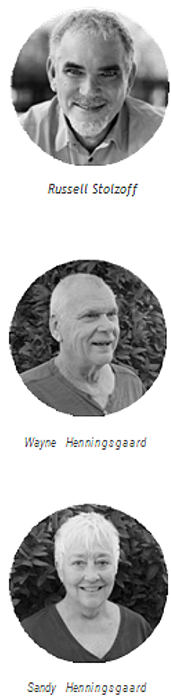
By Russell Stolzoff, Advanced Rolfing® Instructor; Wayne Henningsgaard and Sandy Henningsgaard, Certified Advanced Rolfers™
Russell Stolzoff: Sandy and Wayne, I’m glad you’re both available and interested in having this conversation. We’ve talked about this interview, and Wayne, you’ve indicated that you really want to talk mainly about how you guys work, so, I’d like to spend the bulk of the time on whatever that is. For readers who don’t know you, can you say a little bit about your backgrounds, how you became Rolfers, and how working with athletes became a prominent part of your practice?
Wayne Henningsgaard: I was in graduate school, and working in a psychiatric ward, and also in a four-year program in Bioenergetic Analysis. Bioenergetics looks at how the body influences the character or the psychology of the person. I heard that Ida Rolf could accomplish in ten sessions what it took five years in Reichian analysis or Bioenergetic therapy. So, that led me to my interest in Rolfing Structural Integration as a client, in order to enhance my practice of yoga, release my body from previous sports injuries, and increase my capacity for emotional aliveness. In deciding on another career change, I completed my basic Rolfing training in 1990 and had a full practice of past clientele waiting to 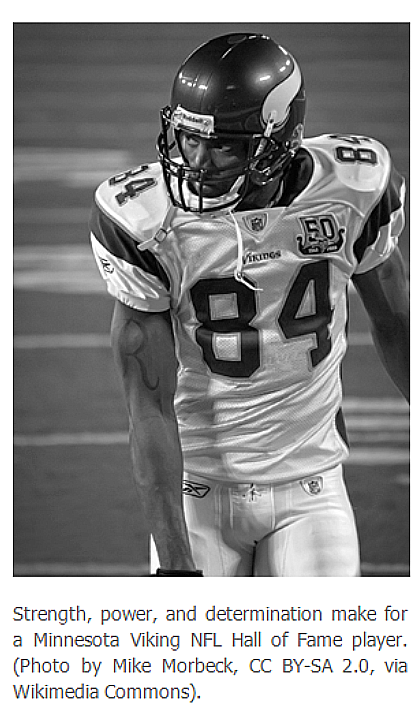 get in for Rolfing sessions. I then began to take classes from the Upledger Institute and continuing education from the Rolf Institute®. Already in my first year, I got my first Minnesota Viking [NFL team] as a Rolfing client, who was a wide receiver, and some other players who were referred by the head trainer at the Vikings. It wasn’t long until I was seeing all the wide receivers, which expanded into running backs and finally into a variety of positions in the offense and defense. As things evolved, we began traveling to other teams as players became free agents or were traded. In 2017 we moved to Phoenix and into semiretirement. In 2018 we began to work with a team of professionals providing services to NBA players primarily and secondarily to NFL players.
Sandy Henningsgaard: As for me, I was as a critical care nurse. I was taking a continuing education class, and the nurse who was teaching it brought Rolfer Bill Smythe in to talk at one of the classes. From my background in critical care nursing, I knew about patient observation – watching people, their skin, their tissue, how they’re moving, if they’re awake or asleep, whatever is going on. Bill worked on a young man in the class, and when he got up off the table my thought was, “He looks like he’s high. No drugs, no alcohol; what does that feel like?” So, I was convinced in that moment that I was going to see this guy Bill. And I was no more than a couple sessions into Rolfing work when Bill started telling me, “You know, you should be a Rolfer.” That started the ball rolling for me.
RS: I know that you work together on the same client oftentimes, how does that go?
WH: It started in a couple of ways. The athletes are really big, and seeing that many players, eventually I needed help. But also we took a three-week class on four-handed work from Emmett Hutchins in where we explored ways to work together on a body. I had a huge load of Viking players, and then other players that were coming, so I knew that to be able to do this work and survive it, we needed to go to four-handed work.
SH: It started out occasional thing, if there was someone who was difficult. Then we decided to make it one day a week for joint sessions, I think. We eased into it gradually. And, it just kind of blossomed.
RS: Are you trying to connect your work, or how do you communicate about what you’re after? I’m sure you must be very in tune with each other by this point, but how do you organize the work when you’re doing it?
SH: Just like in classes we look at the body beforehand and watch it in movement. And then we talk about what are we seeing, what are we going to accomplish. Usually, like 98% of the time, we’re working in the same plane, so on the outside plane, the inside plane, the Fourth-Hour line, something like that. There are times when there’s a complex something or another in a leg and, for example, Wayne’s at the knee, and I might work on both shoulders. But most of the time we work together [in the same plane]. And, our intention is always going to the same place.
There’s something else about us working together that needs to be said, I think. And that is that while we might be equal partners in our relationship with each other, when we’re in a session, we’re working together and there’s one boss, and I do the support work. So, I’m there to support Wayne in any way that I can. He does the heavy lifting, and I do the support work. He makes the decisions, and I help him out. The big thing about working together is to have a communication, where you’re both thinking the same thing and trying to get it done. If there’s people out there that want to do a double practice, it’s about really working together, and somebody’s got to give up being the boss. It’s just about that simple.
WH: I’ll call Sandy in if it’s a difficult injury and there’s a lot of scar tissue and a lot of misalignment. By the time the guys have gotten into professional sports, they already have injuries from high school, they’ve had surgeries in college. Then we work together in a particular area. But otherwise, we’re always working from a continuum of the body, basically from one end to the other. A basic protocol merges the first seven sessions of the Rolfing Ten Series into a single session. The primary emphasis is resolving current injuries, releasing current strains and imbalances to prevent future injuries, and improving athletic performance. Our basic approach is to work the dominant restrained hip joint and restore the position and motion of the ilium in all three planes, then integrate this with the lumbar spine, and then both ends of the body. Then we address the groin and entire inner leg to the Achilles, medial arch, talar and subtalar joints, to the calcaneus. We then address the back of the legs with emphasis on hamstrings, back of the knees, and the lower soleus compartments into the plantar fascia. Emphasis then shifts to the front of the hip and groin and anterior compartments of the lower legs. Finally, we address restrictions in the spine, neck, cranium, and arms. We end the session by integrating the iliacus and psoas to the front of the spine. This sounds like a lot of work, and yes, it targets the main areas of concern at the time.
And that really brings us into the injuries. Most of the injuries are going to be in the ankles, knees, hips, lower back, shoulder girdle, and neck. So, in our protocol you’re right away beginning to open up that field of injuries and starting to correct them.
RS: So, it’s like you’re doing integrative work and accomplishing the goals of the Ten Series in every session.
WH: Exactly. I just look automatically through the Ten Series lens when I look at a body in the first session.
SH: The other thing is that these professional athletes, especially the basketball players, they’re all over the country, so we don’t know how long it’s going to be until we see them again. Therefore, you can’t leave somebody right after a Fourth Hour or something like that, you just can’t leave them in that state. So, it’s go for it and then be sure all of the energy goes through.
WH: You have to remember they’re going to go out and play, so you always have to have them ready for that. You can’t do a progressive series. We don’t want them to be susceptible to injury, and you want to discover potential injuries before they happen and correct them.
RS: How I approach it is each time you see them you might look all over again, as if you hadn’t seen them, but you know you’ve done something already and you’re trying to further the situation.
WH: Yes, totally. Not too long ago we had an LA Laker [NBA team] looking like it was towards the end of his career. Nobody was able to help him with his Achilles, but in one session he was feeling great, he can play again. We’ll see him again, because of course one session doesn’t do it, it’s just the beginning of getting the Achilles free again and the structures related to it. Any particular problem or injury that a player is struggling with is going to come out progressively in a number of sessions. Yes, it’ll get better with the first session, and they think it’s a miracle, but it’s not done. It’s a progression.
SH: It’s all buried under the next layer and the next layer.
RS: How do you explain that to your clients?
WH: It goes into how I learned to approach the work. I think probably the most powerful influence was a class we took from the developer of muscle energy, he’s an osteopath and a chiropractor. In that class I learned that you can free any bone through reciprocal inhibition of the muscles, which told me that if I know how to work the structures around the muscles, I could do the same thing. And I also learned from joint play – that, yes, manually there’s a play in that joint, and I should be able to get long-axis traction or a sidebend or whatever in every bone just through my touch. That really led me to understand density, and that’s how I work. You can perceive density – I call them density trails – and depending upon the injury, it can take you into deeper and deeper structures. The ultimate structure to release is to get to where the density of fascia around a nerve is restricting movement of the bone and causing the inflammatory condition. You’re always working through density, and in an injury that hasn’t had any treatment, the body’s only going to let you through so much in one session. Even if you get what the player considers tremendous results, it’s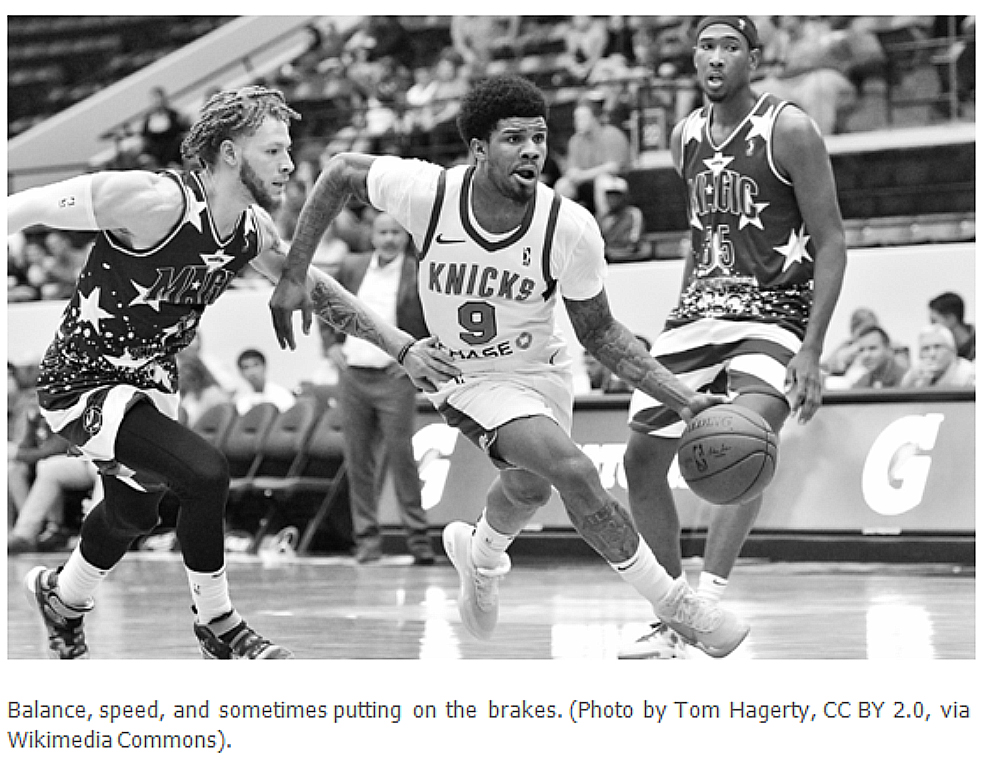 only let you through a certain amount of that density because it’s been layered up in the injury and use process.
SH: And you know how scar tissue goes. We worked on a guy this past summer where one leg was just not supporting him at all. It took us many sessions to get that leg back under him, but we couldn’t get it all at one time because we had to work the ankle and the hip, the ankle and the hip, back and forth.
WH: He’s such a great example, because he couldn’t walk, his career was over. He had a huge scar-tissue-enlarged knee and a huge scar-tissue-enlarged ankle. And he had an infection in the knee that they had not succeeded in removing surgically. But from the density perspective and what I’ve learned I knew we could resolve that. He’s had some fluid removed also, and he was doing his physical therapy rehab, but by working into that density we brought that knee back to normal and the ankle back to normal and him back to normal. It’s incredible when you think about how crippled he was. We had two football players like that over the summer. Work into that tissue, and it will resolve itself. Rolfers shouldn’t back off. They should realize it’s just soft tissue. We did know, I think from the MRI, that there wasn’t enlargement of the bone. But even if the bone was spongy, that’ll come out as the soft tissue works.
RS: Fascinating. It’s really good to hear how you guys work. I think people are really going to appreciate hearing about it.
SH: I hope so. The thing that I think should be stressed to people that want to work with athletes is to get at it and stay at it. If you get a professional athlete to volunteer to be on your table, you learn an awful lot doing that.
WH: My first Minnesota Viking client knew his body and was a great communicator. We hit it off. Take your basic hamstring injury. You’ve got a simple test, right?
– client flat on the back and see if you can bring a leg all the way up. You keep working it until it’s resolved. You can’t do any damage. (If he fell into a hole and got a rupture, that’s a different story and needs an MRI.) But just persistently work until that hamstring is free. I think too many Rolfers would just do a little bit of work and quit. But the athlete wants results.
RS: You’re really stressing here a way of working that goes after the density and persists until there’s a result.
SH: Right. You can’t accomplish that kind of thing in an abbreviated session. These guys we work on, we’re always an hour and a half. Sometimes it’s two and a half or three hours on one guy, but it’s to get everything going, all the injuries resolved, and get it all integrated into the body so he can all go out and play again and be at the top of his game.
WH: Let’s take the hip as an example. When I resolve the density of the tissue with the structures, and into the nerves that are restricted, that bone floats free. It moves. If it’s a hip bone it moves forward and back; it in-flares back and forth; it’s not locked up or down. If it’s not moving, there’s a density of tissue, usually involving tissue that’s restraining the nerve. And even with a hamstring injury, remember the hamstrings are attaching on the back of the pelvis, so you have to be able to address how the hamstrings are fitting in the picture. If the hip is locked up or down or shifted back or forward, you’re not going to get that hamstring resolved.
RS: This is great.
WH: Can I tell you how I developed our concussion protocol? With the cranial work, the inspiration was Don Hazen, who was a Rolfer and chiropractor. We took a couple classes, nerve manipulation Rolfing classes from him, the nervous system, and I think I took some courses from Upledger too.
In my first years of Rolfing work disc problems were a mystery to me, but I learned through the density trails that if I could release the density trails of the nerves, I could take the pressure off the L3 through S1 discs. There are basically just two nerves to consider –although remember they go all the way down to the feet. You’ve got the sciatic nerve track underneath the lateral hamstring, the fibula, to the saphenous and sural nerve down to the lateral arch. And you’ve got the tibial nerve track, medial hamstring, deep back compartment of the leg, down into the plantar fascia. If I release the density trails around those nerves up into the sacrum, and address the sacrum and the lumbar spine structurally like a Rolfer (e.g., dealing with any sidebending restrictions or torsion restrictions of the sacrum), I take the pressure off those nerves, then an injured disc will start healing itself. And it certainly has been proven with the players because they get MRIs all the time. The docs will tell me that they like to have me go in first because I’ll tell them what’s wrong. And, I just do this by the density trails.
For the concussion work, we missed out on an opportunity. Without really knowing what I was doing, I had resolved a concussion problem for a wide receiver for the Dallas Cowboys. This was early on in our work with professional athletes and before concussions were really acknowledged as a major issue in the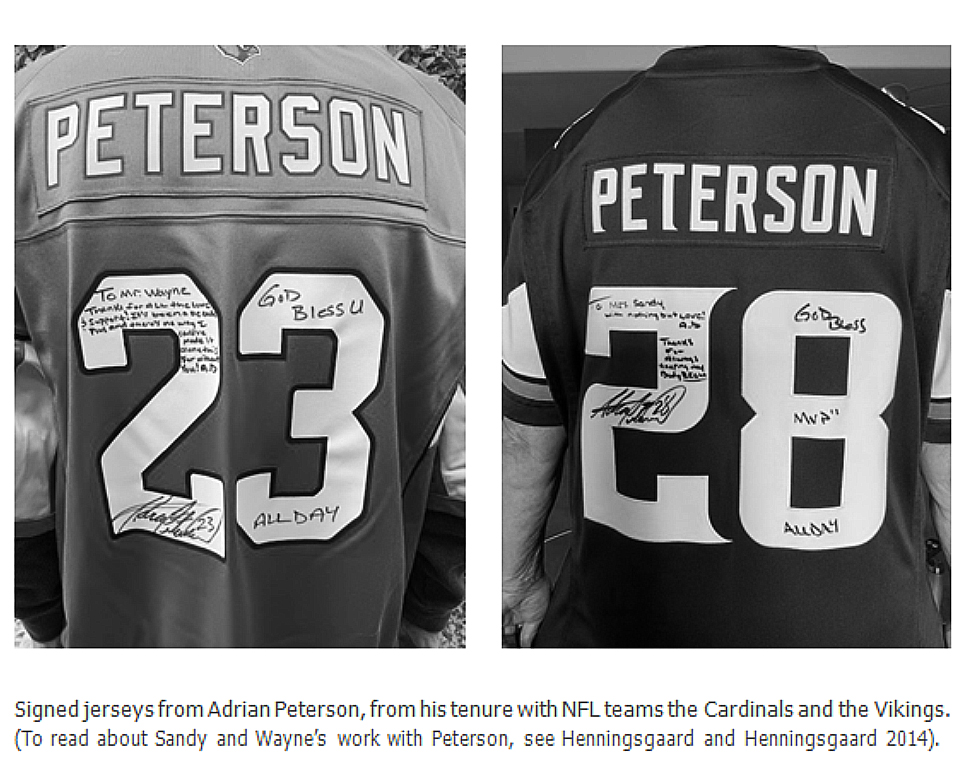 NFL. He called us up and said,
“They’re asking me to head a panel with doctors and everything on this whole concussion issue. I’d like you guys to be a part of it.” I had to tell him that concussions were not my specialty, and I couldn’t have even verbalized enough what I was doing at that point. And I think because of competitiveness and qualifications, Rolfing SI itself was not respected enough to get into a panel like that. But anyway, I decided the same approach applied to concussion injuries. I had taken different osteopathic classes, cranial classes, etc., from different osteopaths, but I really liked the Rolfing approach. I found that what I had done with Rocket and other people, not knowing it, became clearer with understanding of the cranial nerve system. I think the key, again, is you’re approaching the cranium through the nerve system, and taking the pressure out of the brain. You don’t have to work all the nerves. Here’s the ones to address:
The eleventh cranial nerve, the spinal accessory nerve, that’s locked through the trapezius up into the neck and to the head, that’s a primary one because the shoulder girdle is always involved with athlete’s head injuries. When you really get that nerve free, you open that whole thing up for pressure release from the head, because there’s a density trail that goes from there into that compression.
The temporomandibular joint and the trigeminal nerve: working with these unlocks the cranium right away by releasing and balancing the atlanto-occipital joint in the fascial web.
Releasing the vagus nerve (tenth cranial nerve) in the scalene fascia works to release both the upper structures of the neck and the lower diaphragmic area of the rib
The vestibular nerve: it restores balance and coordination to both sides of the body in the fascial he suboccipital nerves and the nerve of Arnold on both sides, because this releases the transition from the cervical spine into the cranium in the fascial net.
WH: Yes.
RS: Okay. I think people are really going to love to hear that. It’s interesting to me that after all this time, I’m hearing this. When I took the Barral-method nerve manipulation classes with Rolfer Christoph Sommer, I discovered that I had been, without realizing it, working along the nerve pathways my whole career. You can almost bet that there’s a nerve there if you’re tracking the density. You just have to learn what it is.
SH: Exactly.
WH: We just need to realize that there’s no limit to our touch. We have the ability to perceive and touch bone. If you can’t touch it, there’s density in the structure to address. Release it some until you can get a hold of the bone and track its movement or nonmovement. Then track and release restrictions to joint play. That gets results, so that’s why we stick to being Rolfers. Resolve density, and everything should move.
RS: I want to touch back on something that you briefly mentioned, about whether our work had the credibility to be on a panel because we don’t have verifiably researched results that we can point to. Instead, we have a lot of anecdotal evidence. Our clients are walking testimonials to what Rolfing SI can do. But the result is we are still on the periphery. I’ve tried to make inroads and haven’t really succeeded. It often defaults back to a kind of informal network of practitioners that players use to get the help they need outside of the organizations that they’re a part of. I think it’s only natural to have a wish that our work would be more recognized and could find its way in among the approaches that teams are incorporating. I know you guys are more connected to the teams of practitioners that are usually around sports teams. What do you think about all of this?
SH: First, it took us a lot of education, training, and application of other modalities into our Rolfing practice. Second, I have a really strong opinion that this guy sitting on my right [gestures to Wayne] is brilliant and determined to get the change done. He’s got that stick-to-it drive that has got to get it completed, or however you word it.
RS: I call that being a dog with a bone.
SH: Yeah, a big dog. There’s all those factors. So when you get somebody that’s like this, like Wayne, and an athlete that wants all of the things he can offer, then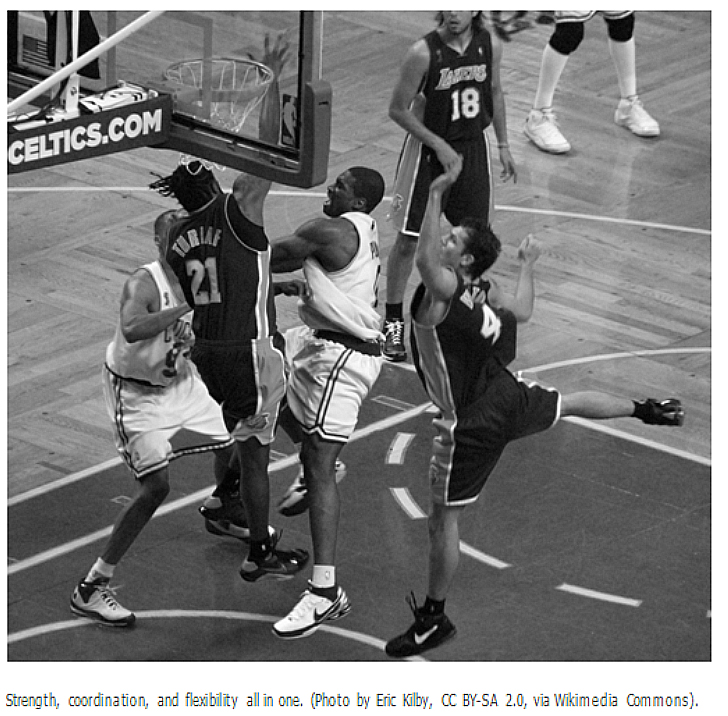 you have something that’s really going, really moving . . . but that’s not a big percentage of the people that populate our planet.
RS: Right. So, it has to be a connection. The person receiving work has to innately recognize that you are after something they need, and they like it.
SH: I think so.
WH: Speaking to your questions of the system, the first head trainer for the Vikings was completely supportive even sending his son to us. But when the new head trainer took over, he didn’t send players over. He was supportive, and he wanted me to give him a report on the players, and I just thought after a while what’s the point? He’s not doing it, why am I reporting to him? The problem I noticed within the systems themselves – because we started to fly and work on other teams – is that there’s so much competitiveness between physical therapists and trainers. They all want to get into the system. So, you’re dealing with that. We were never nixed because of the players. They can’t nix you when you’re getting results for the players, and the players love you. But you’re in the midst of that competitiveness.
We were down in Tampa, and the head trainer said, “I have not been able to sit for eight months, and I haven’t been able to run for eight months. Nothing’s helped me, and the players said maybe you could.” I worked on him. Next day I get a call, “I’m sitting again. I’m running again. Everything is fine. This is great. You guys have helped me so much. Thank you.” A year later, he says, “Well, now I’m not so sure. Maybe it was those drugs that I was taking that really helped me.” Of course, he had been taking the drugs for eight months before the session. Again, he didn’t nix players from coming to us, he didn’t tell players not to come to us, but there is a competitiveness within the system that it’s going to be hard for anybody to break through.
RS: Well, I have to think that the success that you’re having is helping. Even if the seas don’t part, it’s got to be making a difference because your work is getting known, and that’s a great thing.
WH: Yeah. I’m just giving Rolfers a heads up. Don’t take it personally [if you can’t
penetrate the system], because from what I’ve seen on the inside, it’s cutthroat among the many different people wanting to work for players on these teams.
RS: Yup. I got you.
SH: There was a chiropractor who worked for the Vikings and saw them for free.
WH: Back when we were working, chiropractors were seeing the Vikings for free just to say they could see them. We charged. We’ve never not charged.
RS: I know. It’s hard to understand the resistance to paying for good work even when there’s plenty of money to afford it.
WH: Can I tell you one more great story?
RS: Well, you tell me as many as you want.
WH: The week before Christmas we went up to the Gunflint Lodge on the Canadian border for a family vacation, so I was gone for a little bit of time. So the quarterback, after we’d left, had gone down in a game with a serious high ankle sprain and he couldn’t walk. He was in a high leg cast and they were going to try to give him a boot, going to try to figure out a way for him to play.
We were just getting home when the primary receiver and captain of the offense called me up. He said, “I will bring him to your office myself. Please, would you see the guy?” So, he came up. And again, here’s how Rolfers can succeed. Problem was, the talus was significantly out of place. It literally immobilized his whole ankle, his whole foot, and everybody else had tried, unsuccessfully, to adjust or get that talus to move. But what do I do as a Rolfer? I go into the back compartment, his soleus compartment, his gastroc compartment, his interosseus membrane. I get the leg free, and of course easily get that talus bone back into place. He’s walking around my office like he’s not even injured.
The next day I get a call from the practice field. He says, “Wayne, I knew you were a miracle worker, but nobody can believe it including the coach. He’s running around here like he’s not injured.” So, that was probably the fun thing. The coach gave us seats on the fifty-yard line.
SH: One or two rows back from being right on the field. It was cool.
RS: Yeah. That’s a nice story.
WH: We should probably touch on injuries. There’s a common set. Achilles, ankle, knee – you’ve got to be able to work with a lot of knees. And then, typical on these guys, the hips get very, very tight, so releasing the trochanter. Then there’s lower back and sacral problems, and then shoulder girdles, and then neck and head.
SH: The biggest thing is what’s happening in the legs, because they’re on them, they’re using them. And when we started working with basketball players, I didn’t think they were going to have as much head stuff as the football guys, but they do. They fall on the wood floors all the time. They get whacked, and they fall over. Holy cow, every one of them had some kind of a concussion going on that they might not even be able to admit to.
RS: No, they don’t.
WH: Right.
SH: And the other thing with these guys is that they’re in the top 1% of any football player on the planet, or any basketball player on the planet. They’ve been playing that sport since age ten. They wanted to start. One player we worked with, he started at six years old playing in the streets. Think of the injuries in those legs. It’s a long time.
RS: I felt for a long time that one critical thing that Rolfing SI emphasizes, that most every other approach doesn’t, is the relationship between the legs and the rest of the body, the relationship of the legs through the pelvis and the legs through the spine. With a spinal injury, or sacral or
pelvic problem, I don’t know of any other systems of treatment that sees that as a pattern, that sees that what’s going on up there is also in the legs, and that the legs need to support any changes that happen above. I think that alone explains a lot of Rolfing SI’s effectiveness. When it comes to athletes, these football guys, it’s like that’s their motor. There’s so much drive and so much muscular development there, and there have been so many injuries. If you can improve that, you really improve the overall quality.
WH: I agree, Russell, totally. Legs are the primary thing in an athlete, both basketball and football.
RS: I can’t think of a sport where it wouldn’t be so . . . maybe swimming, but I don’t know. Anything that’s weightbearing, gravity, drive, compression, acceleration, stop and start. Think of tennis.
Here’s a question for you. I’ve observed that often the opposite side from the injury ends up bearing up for the injured side. You post up on the side where you’re not hurt. That happens automatically. Usually there’s not an awareness of it happening. And then let’s just say the injury heals, but the balance, the shared load, doesn’t go back to the side that was injured.
WH: Right, that’s true. For me, Russell, the final way to resolve that is down at the core. It’s at the iliacus and the psoas, and then I always give the sacral joint a true adjustment by working through the front of the body. You have to get the core, the spinal engine firing on both sides to bring that over. We always do that last in our session anyway. And I can’t stress enough that you’ve got organs there, you’ve got ligament attachments of organs in the inside of the hips that have to be addressed to get the core to fire.
SH: That’s always so much fun. When Wayne starts working on the psoas and the iliacus, I’m always at the occiput, feeling and seeing if I can free up the nerves that are back there a little more. When the core opens up, it comes all the
way up through the neck and the head, and I feel it.
WH: Again, you’ve got the nerve of Arnold and the suboccipital muscles on both sides, so the nerve of Arnold will be still locked up on one of those two sides if they’re still in compensation like you’re talking about, Russell.
Another thing that’s interesting is the change in recovery with stem cells. In the
past, if there was a serious ligamentous injury, it was going to heal slow, a couple of weeks even. One time Cris Carter had gotten a high ankle sprain, and he came out in a boot. Sandy and I together worked those tendons that had been displaced and the swelling. We worked literally just in density and freeing the most minute tissues, putting that leg and ankle back together, and his swelling came down. He played, and he got 160 yards the next game. But the following game he only lasted half a game; again, that’s that deeper injury, so it took time to heal. It was such a serious injury. It was in the tendons and the ligaments themselves, but we weaved that stuff back together like putting the tissue back in place to get it to work.
SH: Yeah, it was well worthwhile. That was way before stem cells.
WH: With stem cells, that player can be right back playing, so that’s a big deal.
RS: Thank you guys so much. WH: I hope it can inspire Rolfers. RS: I know it will.
Russell Stolzoff is a lifelong athlete whose understanding of Rolfing SI’s impact on embodiment and performance dates back to the dramatic improvements in balance and quickness he experienced from his first Ten Series in 1983. For the past thirty years he has devoted his professional life to elevating his skills as a practitioner and instructor. In 2010, Russell founded Stolzoff Sportworks to bring the benefits of Rolfing SI to professional athletes. He was instrumental in helping members of the NFL’s Seattle Seahawks stay in the game and perform at the highest level en route to two consecutive Super Bowl appearances and the 2013 Super Bowl NFL Championship. Russell’s diverse background includes scientific research and studies in Somatic Experiencing® trauma resolution and Bodynamic Analysis (a developmental approach to body psychotherapy). Russell is a member of the Dr. Ida Rolf Institute® (DIRI) Advanced Faculty. He lives and practices in Bellingham, Washington.
Wayne Henningsgaard completed a BA from the University of Minnesota in 1972, later followed by an MA in counseling psychology from the University of St. Thomas. He also completed training programs in Gestalt, transactional analysis, and Bioenergetic therapy. He worked in and supervised the nursing staff in a psychiatric hospital and as a family therapist in an alcoholic family treatment center before going into private practice as a body- centered psychotherapist and holistic bodyworker. He realized that to be human was to be a body forming a personality in need of connection to one’s deeper soul and a higher power beyond oneself. For his second career he went into Rolfing SI. By 1990 he was practicing as a Rolfer exclusively and began seeing Minnesota Viking players on a regular basis, along with other NFL and NBA players and other professional athletes. Since 2018 he has worked as a part of a of professional team offering services to NBA and NFL players. Sandy and Wayne’s website is continuumrolfing.com.
Sandy Henningsgaard spent thirteen years in the nursing profession, with the last ten years in critical care. She traveled to Munich (Germany) in 1985 to become a Rolfer and completed the Advanced Training in 1990. Sandy’s dedication to health and well-being guides her Rolfing practice. She maintains her Minnesota nursing license and Arizona massage license. When not traveling with Wayne to work on NBA and NFL players, she enjoys playing in their ceramic studio and playing with their two dogs. Sandy and Wayne’s website is continuumrolfing.com.
Further Articles by Wayne and Sandy Henningsgaard:
Henningsgaard, W. and Henningsgaard,
Henningsgaard, W. and Henningsgaard,
Keeping Them in the Game: Working with NFL and NBA Athletes for Performance and Recovery from Injury[:]