

Introduction by Linda Loggins: Through mutual colleagues from Texas, I met Wiley Patterson in Boulder in the 1990s. Wiley and I have interacted at regional meetings, structural integration workshops, and occasional social gatherings. I consider him a friend and colleague. Wiley graduated from Universidad Autónoma de Guadalajara medical school in December 1978. He went through his initial ten-session series of Rolfing® Structural Integration (SI) in the summer of 1985, and graduated from the Rolf Institute® of Structural Integration in November 1992. Wiley did his Advanced Training in the spring of 1999, and his Rolf Movement Certification Training in Brazil in 2008. At the suggestion of Anne Hoff, Editor-inChief, I sought out an opportunity to talk with Wiley for this issue of Structural Integration: The Journal of the Rolf Institute®. What follows is a recent interview I did with Wiley to investigate his perspective on healthcare, and Rolfing SI, from the standpoint of a physician and a Rolfer.
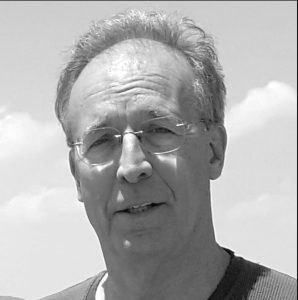
Wiley Patterson
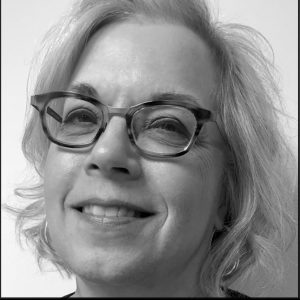
Linda Loggins
Linda Loggins: How important do you think it is for Rolfers to have credibility in the medical community, and what do you think is the biggest obstacle in obtaining it?
Wiley Patterson: I think it is minimally important for us to position ourselves relative to the medical community. I think that Rolfers are trained in a ‘healing’ modality and the medical community is trained in a ‘treatment’ modality – I think the mindset of each group is extremely different. My experience with most physicians is that they are not that interested in what we can do. It threatens their self-perceived monopoly, and most physicians don’t understand healing well at all.
LL: You certainly can speak on behalf of physicians – that is a very interesting comment.
WP: In speaking with physicians over many years, most aren’t interested in Rolfing [SI]. They actually quit listening very quickly. However, I’ve met a few who are interested, either those who have a mentality that allows for other possibilities, or those who have grown up in other countries where bodywork is more mainstream and don’t feel threatened by it. They actually welcome it and recognize it as being valuable.
LL: Do you feel that it is important for Rolfers to connect with other healthcare professionals in order to gain legitimacy, or do you sense a reluctance to do so, because of a lack of knowledge of what structural integration is?
WP: I think Rolfers gain legitimacy because of the power of Rolfing [SI] itself. People who don’t understand the work can’t help to legitimize it. Those people who train to become Rolfers understand what the work can do, and that is enough. I’ve certainly agonized in the past over whether my work as a Rolfer would be well-received and held as legitimate by other people, but after a while, I realized that that wasn’t going to happen because Rolfing [SI] is a different paradigm. I finally got to the point where I quit trying to get other people in other practice philosophies to approve of what I was doing.
LL: How then do you describe yourself and what you do to prospective clients?
WP: Most of my new clients are wellinformed about me and about Rolfing [SI] when they contact me because someone whom they trust has told them “Rolfing [SI] delivers the goods!” They have been ‘pre-sold’, so to speak. For those clients who aren’t as knowledgeable, I explain that Rolfing [SI] improves the function and order of their physical structure. I also explain that I don’t expect them to truly understand what structural integration is until they have received it in their physical bodies. I tell them the only risk to them is the time and expense of a first session, but afterwards, they will be able to determine if what they received was valuable to them. My responsibility is to deliver a successful, authentic experience to them so that they will be willing to continue exploring their potential by receiving more of the work. I had no idea what Rolfing [SI] was until I felt it in my own body – and neither did you – but when I experienced it, the conversation broadened enormously! That’s why I quit trying to convince other physicians of the validity of the work, because unless they were willing to get up on a Rolfing table, and experience it for themselves, there wasn’t any valid way for me to talk about it with them.
LL: Because they couldn’t quantify it?
WP: Exactly. They don’t have an x-ray plate to look at, or an intellectual file to put it in, and all it does is confuse them. That’s what I think is the essential problem. Rolfers have gotten better and better about describing the work as enhancing presence, organization, and awareness in an individual, because we’ve all experienced that for ourselves, but for others who haven’t had the same experience, they don’t have anything objective to which to relate. Healthcare professionals can’t do it, prospective clients can’t do it, and insurance companies certainly can’t relate to it!
LL: You were already a physician when you made the decision to go through the training to become a Rolfer, weren’t you?
WP: Yes. The first time that I heard about Rolfing [SI], it made sense to me.
LL: You must have already been thinking ‘outside the box’ as a physician, when you heard about structural integration, or you wouldn’t have been receptive to the idea of the work, correct? WP: That’s true.
LL: How do you feel about the term ‘structural integration’ as opposed to ‘Rolfing’ [SI]?
WP: I think ‘structural integration’ is a more accurate term to describe what the work is about, but I still use the term ‘Rolfing’ [SI] a lot.
LL: We both know the history of Rolfing SI, in that Dr. Rolf first presented her work to the medical community, but ran into resistance. She ultimately decided to change her focus and began to present her work to those individuals who became the first Rolfers, who were outside the medical establishment at that time. If I understand you correctly, you haven’t seen much difference in the attitudes of physicians from back then until now.
WP: That’s exactly right. Physicians are sometimes interested to hear about the theory behind the work, to get into an intellectual discussion, but not much interested in exploring what it can do for individuals. The same is true with my efforts in presenting the work in more mainstream settings, such as to patients in my practice. If patients aren’t ready to experience the work for themselves, they don’t like it, nor do they want it. It speaks to the heart of the doctor/patient relationship. If a patient comes into my office expecting pills, and I rub their arm, they get unhappy very quickly. Some patients are inherently open to it, just because of their nature, but I believe that a large percentage of the population doesn’t want to get [Rolfing sessions]. I think it’s a decision made on an unconscious level, that they somehow sense that it isn’t right for them.
LL: In terms of your patients/clients, do most of the people you encounter in your practice come to you first as a physician, and then experience you as a Rolfer, or vice versa?
WP: That’s an excellent question, and I want to speak to it in terms of marketing strategies. People come to me expecting something in terms of a particular outcome, and they believe that modality X will give it to them. If you deviate from their expectations, they aren’t going to want to work with you. A lot of it depends on whether they can place their trust in you to deliver what they ask for upfront.
Some of the people who come to me to “fix their shoulder” convert into Rolfing clients because I give them what they ask for, i.e., I fix their shoulder, but do it in such a way that expands their awareness of the rest of their structure. That becomes the starting point for us to begin a discussion about Rolfing [SI] and what it might be able to do for them. Conversely, I have patients who come to me for things like sore throats, who aren’t receptive to alternative therapies, and only want antibiotics. If I try to offer them something else, that is the quickest way to lose them as a patient.
I use a technique called ‘motivational interviewing’ (Miller and Rollnick 1991) when I speak to patients/clients. Sometimes I’m able to expand their line of inquiry by asking them what is it that they want, and then talk about all the things that they’ve tried in the past to achieve that outcome, whether or not their efforts were successful. I then talk about the possibilities or options available to them, and determine to which ones they are receptive. If bodywork is an option that they will consider, then we pursue it. If not, then I drop the subject.
LL: Change of subject – what do you think about recent efforts to limit a Rolfer’s scope of practice through legislation proposed by other healthcare professionals? You probably don’t feel threatened by alternative therapies, unlike some of your medical colleagues; do you believe this to be a real threat to others in the Rolfing community?
WP: Any time anyone outside the Rolfing community tries to tell Rolfers how to practice, there are going to be problems. Only Rolfers understand how to perform the work. There is always bureaucratic nonsense because people enjoy being powerful, and it needs to be addressed periodically. I like the example of what happened here in Texas, that Rolfing [SI] has been excluded from the massage laws adopted by the state of Texas. It makes it easier for us to do our work, because no one has the right to tell us what we do. Imagine if insurance companies began to tell us what to do, just like they have done with physicians – self-serving statistical analyses now dictate scope of treatment based on reimbursement, in order to save money for the insurance companies. Rolfing [SI] is a healing art, and the imposition of legislation is counter to what’s most important, which is “What does this client need today?”
LL: Let me now bring up the topic of insurance companies. Most people when they graduate from Rolfing training and begin a Rolfing practice are faced with the dilemma as to whether or not they will solicit payments from insurance companies for client sessions. How do you feel about that? Speak about the advantages or disadvantages.
WP: The temptation is to believe that you will get your practice established more quickly by ending up with more clients. You may if you do it correctly, but you will have to work for less reimbursement per session, and you will have to allow the insurance companies to dictate the course of treatment. Most Rolfers with an established practice deal with clients on a direct-payment basis, which allows them to work in an autonomous fashion, which is the most secure kind of practice to have. No one can take it away from you. If you depend upon word-of-mouth referrals from satisfied clients, no one unhappy client can take your practice away from you. You sleep better at night! There is that initial insecurity that comes with starting out, when you wonder where clients will come from, but as your outcomes improve and you become established, you build a network that will produce referrals and help sustain the practice.
Personally, I don’t want to have anything to do with insurance companies! I would end up losing more than I could possibly gain at this stage of my Rolfing career by accepting third-party payments. Not only that, but insurance reimbursement ends up affecting the practitioner/client relationship. Time ends up being spent discussing copayments, upfront costs, etc. Clients end up focusing on the money aspect, rather than the desired outcome. From a cost-effective standpoint, the cost of extracting insurance payments can end up costing more than the reimbursement amount. My secretary can end up spending four hours of work on one one-hour claim! It can turn out to be a real nightmare.
LL: As a physician, you are regulated in your practice by the Texas Medical Board. Do any of the rules that they dictate affect your practice as a Rolfer?
WP: There are no restrictions in Texas that affect my ability to practice as a Rolfer. However, there is a Rule 200 in the Texas Medical Board Rules and Regulations that speaks to alternative medical practices. The rule states that patients have the right to seek treatment outside of established medical protocols, such as when they turn to alternative therapies after conventional medicine has not helped. Physicians are also authorized to ‘step outside’ of normal protocols when treating patients, if deemed necessary.
LL: What kinds of changes have you seen in medicine since you began to practice as a physician?
WP: When I started practicing as a physician, there were no such things as MRI machines. There weren’t as many laboratory tests to order, either, to help formulate the correct diagnosis for a patient. Physicians had to be better diagnosticians, more ‘hands-on’ in terms of using physical examination to evaluate their patients. Nowadays, although scientific understanding has gotten much more sophisticated in some areas, I see physicians much more dependent on imaging studies and test results to help determine the correct diagnosis. There is also a broader pharmacopeia to prescribe from, so that more often than not, prescriptions are used to treat patients by suppressing symptoms – which I think has become the primary goal, rather than seeking to heal them.
Medicine is much more regulated by insurance companies and by government, which I believe is a conflict of interest with a physician’s role as a healer. When insurance companies dictate the rights that patients have or don’t have, and dictate what is appropriate behavior for a physician, you are talking about bureaucratic control where physicians will obey the ‘letter of the law’, rather than the ‘spirit of the law’ on which regulations are based.
Computerization will continue to change the practice of medicine in ways inconceivable today. MRI machines, improved demographic understanding through meta-analyses, and computer generated pharmaceutical designs are current examples.
LL: What do you see as the future of Rolfing SI? You have obviously been thinking about investing in the future, for you have been instrumental in setting up a monthly study group in Austin, Texas for the purpose of continuing education for structural integrators.
WP: I think Rolfing [SI] is a phenomenal modality. Ida Rolf was clearly a genius, and she has left a sizeable legacy to us. There are similar parallels with osteopathic manipulative work. A.T. Still was also a genius, and he left a sizeable legacy as well. Both types of work take a lot of time to master, and either one is worth a lifetime of study. Rolfing [SI] will survive as long as there are individuals who dedicate themselves to understanding its power and its scope.
The study group that I organized helps give Texas Rolfers an opportunity to dialogue about our work, while enabling us to come together and foster community, which I believe is helpful. Rolfing [SI] can be a lonely profession. Study groups can also provide continuing education in an alternative format, besides three-day workshops and formal instruction. We have had anatomy discussions over the past three years, as well as in-depth discussions on Rolfing themes and concepts. The format has allowed veteran Rolfers of forty-plus years of experience to dialogue with brandnew Rolfers just out of school. I cannot over-estimate the value of what I have personally received from the discussions. On more than one occasion, the atmosphere in the room was so profound that I could only express gratitude for what I was experiencing at that moment. I could have never gained the insights that I’ve received from the study group on my own, for the synergy of the group was responsible for it.
LL: Speaking of brand-new Rolfers, do you have any advice for those just out of school, or those considering a career in Rolfing SI?
WP: In order to master the work, I believe that you must be very intentional in how you go about doing so. I don’t think that it happens by chance. Early on in my career, I picked out people that I admired because of the results that they were able to achieve with their clients, and I sought out opportunities to listen to them and try to understand the perspective that each one of them had toward Rolfing [SI].
For those people expressing an interest in becoming a Rolfer, all I do is encourage them. Even though it’s a very unusual path to take, it leads those who follow it to self-fulfillment and awareness that most people on this planet never achieve. It’s certainly not the only way for people to gain awareness, but it is a very formidable way to achieve it.
LL: Any last thoughts?
WP: There’s no question that Rolfing [SI] has made me a better physician. I learned from my Rolfing training how to perceive, and through the years in my practice, I’ve learned how to trust my intuition, how to objectify what is real and free myself from prejudices and preconceived biases. I am still improving in my ability to see the original deviation from health and the simplest way to help clients find their way back to their best possible current level of health.
I’ve also noticed that among my highly competent Rolfing colleagues, their level of critical thinking is equal to most highly competent physicians that I know, in assessing a problem that they encounter. The work demands it of us. I’ve learned about anatomical functioning in a way that most physicians don’t understand. I’m surprised by how many conditions can be resolved from physical manipulation. It has opened my eyes to the real causes of illness. I consider myself very fortunate to have been able to carry on the legacy of Dr. Rolf, and I will continue to disseminate the knowledge of her work to those who trust me with their health.
Wiley Patterson graduated from medical school in 1978 and became a Rolfer in 1992. He enjoys sailing, aikido and time with family and friends.
Linda Loggins is a medical technologist certified by the American Society of Clinical Pathology (ASCP) and a Board Certified Structural Integrator. She graduated from the Rolf Institute in 1993, became a Certified Advanced Rolfer in 2002, and completed her Rolf Movement certification in 2006. She graduated with a master’s degree in public health in 2014. She walked the Komen Breast Cancer three-day sixty-mile walk for the third time this year. She especially enjoys being a grandmother to a wonderful two-and-a-half-year-old boy named Trevor.
Bibliography
Miller, R. and Rollnick, S. 1991. Motivational Interviewing. New York, NY: Guilford.A Physician’s Perspective