
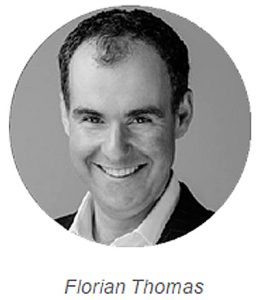
By Florian Thomas, Certified Rolfer
ABSTRACT The author is a professional opera singer and singing teacher who has observed the effects of the Rolfing® Structural Integration (SI) Ten Series on his own voice and on others. He discusses the potential impact of Rolfing SI on vocal production, both in the classic themes of breathwork and grounding, but also in more specialized anterior neck and laryngeal work. Rolfers should consider including an element of audio assessment in their standard body-reading practices.
The aim of this article is to raise awareness within the Rolfing community of the great value and potential of our work around the voice and the upper airway, as seen from the perspective of a singer.
As with many of my Rolfer colleagues, my background is not originally in bodywork. I am an opera singer, and my journey toward also becoming a Rolfer started as a client. I wasn’t aiming to resolve any vocal issues when I began the ten-session series, but I was interested in getting rid of back pain. Rolfing SI managed to get me pain-free, but I am impressed even more, in retrospect, when I consider how my voice improved and changed during the Rolfing process.
Given that the first session centers on the breath, it immediately has incredible potential for singers.
I noticed an immediate increase of freedom when taking in air to sing and that my voice quickly became more resonant with greater tonal ‘depth’. Fast-forwarding several sessions, I noticed a wider range of movement around my larynx. It became less challenging to express emotion through my voice, and I experienced greater ease when singing top notes. This was interesting because my first singing teacher had mistakenly trained me as a baritone: I subsequently retrained toward my real voice type – tenor. I was already making this transition before my first Rolfing session, but it was remarkable to me that major breakthroughs kept happening during the process. Most notably, after session seven the tongue root and the structures around the larynx became relaxed and my singing could more easily change from a falsely darkened sound into a freely ringing, vibrant tone.
Being a singer is just one of a number of ‘professional voice user’ careers, the description also being commonly applied to teachers, lawyers, salespeople, gym instructors, and so on. I’ve always wondered whether it is, in fact, a very meaningful term, since it is unclear where the boundary with nonprofessional voice use really is. In my view, we all are far more dependent on vocal health than is widely acknowledged. To lose our voice, or to experience restrictions in the possibilities for how we can use our voices, has serious consequences for our quality of life.
Phonation is not even the most important function of the laryngeal mechanism. In terms of mammalian survival, its first job is protection of the airways. Secondly, it functions as a kind of valve enabling a building-up of pressure in the body (e.g., to lift something, in childbirth, coughing, etc.). Phonation, speaking, and singing are undoubtedly important add-ons: in survival terms the ability to scream for help or to yell at a predator should not be underestimated. When viewed together, the incredible synchronicity of the many small muscles that are required for swallowing, breathing, and speaking actions may be regarded as among the most complex that a mammalian central nervous system is asked to coordinate.
It is nevertheless true that singers use their voices especially intensively. As a singer, I have to take special care to maintain my instrument optimally, just like any musician. I regularly use my voice for several hours a day, producing a wide range of pitches, colors, and dynamics at each working session. With classical singing, the voice needs to be able to fill halls of several thousand seats without any technical help, such as a microphone. In performance, my voice may need to be heard over orchestras of some one hundred musicians or more for long stretches, without tiring.
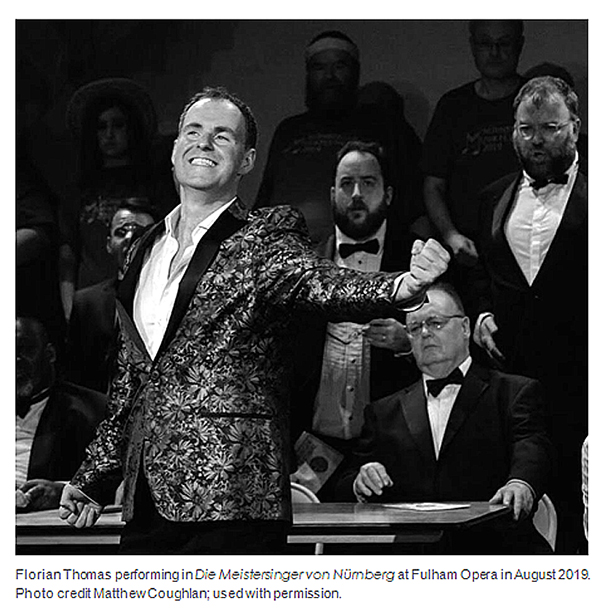
High and quick phrases might be followed by especially low phrases, with long notes to hold. Some repertoire demands that performers switch rapidly between speaking and singing. Now that may sound easy, but in reality it is important to know which kinds of movement allow you to do it efficiently, so you can safely maintain both vocal health and quality of tone.
What I ask from my vocal instrument is in fact quite similar to the physical demands for a dancer, in that singing requires flexibility and stability at the same time. I have to be able to maintain a constant airflow while the vocal mechanism moves freely. The larynx needs to be able to raise and lower, in order to rock forward (tilt) and to make highly accurate motions of the cricothyroid joint,so crucial for producing different pitches. Both extrinsic and intrinsic muscle groups work intensively in this area to achieve these actions. Because of the complexity of these demands, a great number of factors can influence the freedom of this coordinative action, yet there are often restrictions that are directly related to the tensional state of the jaw and tongue, as well as the tone of the muscle groups at the larynx. Rolfing SI can positively influence all these factors. There is also, of course, the widely debated question of breathing for singers. Whole pedagogies have been built on differing opinions concerning the benefits of belly or chest breathing, ribs
in motion or held out, diaphragm sent high or low during singing, and debate about firm or flexible stabilization of the core. As this is a controversial field, it isn’t possible to address these factors in detail in the context of this article, but the fact of all this variety suggests room for individuality and nuance with no single ‘right technique’ for professional singing. As a general rule, however, it is beneficial for singers not to block or lock the breath, so here again, Rolfing SI can be very beneficial.
As well as all the suspensory muscular groups attaching with the vocal mechanism, the breath, arms and shoulders and core, I am also constantly aware of the need for grounding when I walk on stage, and when I work with singers and actors. A lack of grounding often causes shallowness of breath that makes it very challenging to sustain uninterrupted airflow and makes it much harder to keep nerves under control. This is another point where I found Rolfing sessions so incredibly helpful: our work supports grounded movement.
As Rolfers we are interested in many aspects that influence the vocal mechanism and our ability to express ourselves as humans. I am always astounded by how much clients change in the way they talk about themselves within the journey of the Ten Series. It is not only the content of what we say, but also the way we say it. As a singer, I would very much like to encourage my Rolfer colleagues to add an aspect of audio assessment to the body-reading process. Just listening to the noises the body makes, and focusing around breath and voice, can be very informative. We can ask ourselves, how does the in-breath sound? We can see where the breath travels within the body as well as hear it. It is therefore important to listen to the quality of the voice when we speak with our client. Is the voice full of energy, full of pitches and colors and full of resonance, or does the voice sound held back, squeezed, constricted? If the Rolfer is insecure to assess these vocal qualities in depth, we can simply listen to the client and try to feel what is going on in our own throat while the person is speaking. Mirror neurons are always in action! This is possibly not the most scientific way to perform an assessment, but we all know that we feel and sense a lot through observing the person we are working with, whether we intend to or not. We may additionally show a client how to palpate her or his own voice box (larynx) and assess, together, if it moves at all while breathing, how it moves during swallowing, and whether the whole visceral neck feels free and soft.
Today it appears that manual practitioners and even manual therapy schools tend not to place a particular focus on work at the visceral neck, and I think the reasons for this are multilayered. The vertebrae in the cervical spine are small, while the range of movement is relatively big. The muscular structures are also small and there are many layers working in consort to maintain flexibility and stability at the same time. To manipulate this area undoubtedly requires a high degree of manual skill and, as a general rule, only light pressure. Safety and maintenance of optimal functioning are vital. All the main blood vessels run through this area; air and food have to travel through this passage to get to the organs that can process them: life and death lie in close proximity in the visceral neck. There are of course also psychological aspects connected to the whole throat area. People refer to ‘swallowing’ their emotions, or are stopped from saying something by ‘a lump in the throat’, and so on. For all these reasons and more, some of our clients feel very uncomfortable when they are touched in this area, and some practitioners may also not feel safe working there intensively.
In order to better integrate the voice – our chief organ of expression – into our holistic Rolfing view, which questions, then, should we ask ourselves? Assessment of the function and structure of the vocal mechanism can be built onto the assessments that we feel already comfortable with, asking, for instance:
It is worth noting that the simple question of symmetry can have a disproportionately significant influence in and around the neck since the structures are small, and some part of the vocal tract might be compressed by an asymmetry. Indications that the vocal mechanism is compromised will often be connected to the position of the head and neck, and, of course, to the mandible. Since we are doing neck work in every session, we may say that every session has an element of voice treatment within it. The freedom of the vocal mechanism is definitely linked to the neck and the curvature of the cervical spine.
Tensions in the suspensory muscles of the larynx can cause a restriction of range of movement in the area. Any manipulation around the larynx can also influence other muscle groups, such as the constrictors, positively. For instance, if we ask our clients to swallow, and the maneuver cannot be performed without a
compensatory action of the head, this is a strong indication for shortening of the muscles around the larynx.
There is a significant amount of literature and substantial research to refer to in the fields of vocal pedagogy, the medical ENT (ears, nose, and throat) field, and in speech therapy. If we are asked to assist in the rehabilitation of a client with vocal dysfunction, it is worth acknowledging that many of the most common dysfunctional patterns occur through generalized muscular hypertension. I would encourage my colleagues to apply their knowledge as Rolfers to assess the structure and function of the larynx, but also to exercise caution, and to consult and refer to specialists in extreme cases. As Rolfers, we can translate our training into assessing the position of anatomical landmarks such as the hyoid bone, the thyroid cartilage, the cricoid ring, and the jaw, toward optimization of the structure and function of the larynx.
In my career as a singer, I’ve had contact with several specialists who offer laryngeal manipulation. Most have come from a physiotherapy or osteopathy background. There are also special institutions such as the Deutsche Stimmklinik in Hamburg, where manual therapy is part of vocal rehabilitation. I also attended a course led by the London- and Tel Aviv-based osteopath Jacob Lieberman, who is one of the leading experts in the field. There are also myofascial-release therapists and massage therapists who specialize in the area of neck, voice, and swallowing disorders.
Due to our holistic approach, Rolfers have something special to offer singers, who must call on the whole body as their instrument when on stage. Performers, in particular, are always searching for the most efficient way to use their bodies to express thoughts and feelings. When singers practice, we are searching for feedback from inside our bodies to feel and to understand how we can make musical lines easier for us and to open more channels for our creativity. If we sing with others or in very large venues, we may at times hardly hear our own voices, so we have to learn to trust our interoceptive sense.
In Rolfing SI, we are teaching our bodies how to establish a relationship with gravity that supports us and gives us the feeling of ease and mobility. The process directly creates space, and we then help the body to find more ways to use it. The relationship with gravity – which is at the center of Rolfing work in such a unique way – clearly relates profoundly to the arts and the singing world, and indeed all other areas of human life. Rolfing SI supports us in gaining higher levels of uprightness and joyful grace and dignity in our bodies, which then opens up possibilities for a more creative life. Rolfing work directly assists our freedom of expression: through voice, in body language, and in movement of all kinds.
Bibliography
Chapman, J. 2016. Singing and Teaching Singing: A Holistic Approach to Classical Voice, 3rd ed. San Diego: Plural Publishing Inc.
Fregosi, R. and C. Ludlow 2014 Feb. “Activation of Upper Airway Muscles During Breathing and Swallowing.” Journal of Applied Physiology 116(3):291-301.
Harris, T., S. Harris, J. Rubin, and D. Howard (eds.) 2018. The Voice Clinic Handbook, 2nd ed. Braunton, UK: Compton Publishing.
Husler, F. and Y. Rodd Marling 1976. Singing: The Physical Nature of the Vocal Organ. A Guide to Unlock the Singing Voice, 3rd ed. London: Hutchinson and Co.
Lieberman, J. 1998. “Principles and Techniques of Manual Therapy: Application in the Management of Dysphonia.” The Voice Clinical Handbook, T. Harris, S. Harris, J.S. Rubin, and D.M. Howard (eds.). London: Whurr Publishers, pp. 91–138.
Roy, N. 2008 Aug. “Assessment and Treatment of Musculoskeletal Tension in Hyper Functional Voice Disorders.” International Journal of Speech-Language Pathology 10(4):195–209.
Rubin, J.S., E. Blake, and L. Mathieson 2007. “Musculoskeletal Patterns in Patients with Voice Disorders.” Journal of Voice 21(4):477–484.
Florian Thomas is a Certified Rolfer, singer, singing teacher, and Tomatis® practitioner. He holds a masters degree in musicology, and studied lied and oratorio at the University of Vienna. Florian worked for several years in the Vienna State Opera Chorus and is now a freelance soloist performing internationally. He lives in Oxford, UK, and has Rolfing studios in Oxford and London (www.align-in-time. co.uk and www.florianthomas.co.uk).
Manual Work for the Voice[:]