

Introduction
In my opinion, developing your craft is your very best form of Practice Building. The more skilled you are, the more clients refer others. So committing to lifelong learning is primary. But, until you have a self-sustaining practice (and in many environments, this may never be possible), what other ways are there to build your practice? I have a favorite practice-building approach that I don’t hear discussed very much. It helped me create a steady twenty-client-per-week practice in six months. A couple months later, it became twenty-five clients (all I wanted to see at the time) with a six-week waiting list.
There is much more to Practice Building than any one technique. Our beliefs about seeing Rolfing Structural Integration (SI) as a business can support or derail our best practice-building efforts. For more about this, see the sidebar on page 36. If we believe it is okay to want a thriving practice, how do we attain it? This article will initially review several approaches and techniques for developing your business, ending with a deeper exploration into one approach that can be extremely effective and often overlooked.
Consider the Obvious
First, I’ll discuss some of the common approaches to promoting your business: paid advertising, a website, printed marketing materials, and demonstrations/workshops.
Paid Advertising
I have created two busy practices from scratch. My first practice was in Athens, Georgia, and a couple years later I moved to Durham, North Carolina. I am very grateful for my first practice. I grew it fairly quickly using a weekly ad in Flagpole, a local music and events newspaper. Paid advertising often has a low return on investment, so it’s rarely my first recommendation for Practice Building, but it can work well if the right elements are in place. First, find a publication that reaches the population in your immediate vicinity (I was in a college town, and the publication I chose focused on that market) and speaks to a segment that wants and (dare I say it) can afford your services. (We are all concerned about providing our services to those who need them, rather than only those who can afford them. Rather than being a low-cost provider, it is often preferable to charge a little more so you have the flexibility to help special cases on an individual basis. If you set your fees too low, you run the risk of burnout, which may result in you helping fewer people over the length of your career.)
If you do place an ad, commit to a regular submission. Well over a decade ago, I bought an eighth of a page ad every week at $85 per ad. That was $340 a month – quite a chunk for a new Rolfer™. At my original fee, this was the equivalent of one session per week. But my ad brought me an average of three clients per week. After a few weeks, it started adding up.
In addition to finding the proper publication, one of the reasons I think my ad worked was that I developed a recognizable look and layout, but changed the content each time. So the fonts and the ad’s title, “What’s Rolfing?”, stayed the same, but in each issue I answered the question differently with a different quote about Rolfing SI. I suspect that people tended to return to see what changed each week. You want people to start recognizing you by encountering your business on a recurring basis. Of course, the ad directed them to my website where they could learn more.
I personally don’t think advertising in telephone directories, such as the “yellow pages,” is worth your while. Not only do most people use the Internet to find information, directory ads are usually seen by people who aren’t looking for Rolfing SI and usually result in long telephone conversations with poor return on investment.
Website
I designed my website to be informational – this has been a key part of my marketing strategy over the years. Initially, I wanted to provide a resource for clients to learn about Rolfing SI, but the approach had additional benefits. First, my comprehensive website lent credibility. Second, it saved me a bunch of time because I didn’t have to answer many questions for new clients on the phone (before developing my site, I would easily spend a half hour on that).
Invest your time upfront creating a website that is easy to navigate, low on clutter, and responds to client needs. It will develop the way you talk about the work, and it will require you to clarify policies, procedures, and boundaries. That exercise itself will strengthen your business model, which creates a better experience for your clients and ultimately improves your bottom line.
Printed Marketing Materials
Especially when you’re creating a new practice, it helps to keep your printed marketing materials low-cost and flexible. Being able to design and lay out your own materials means they can be living documents that allow experimentation and ongoing development. With today’s inexpensive high-quality printers, you can create professional looking materials for very little money. But do spend the time editing, and then editing some more, and attending to design details. The brochure represents you.
In addition to trifold brochures, I created small (8.5×11 inch) posters that had a pocket for my business cards. I hung posters in organic groceries, coffee shops, etc. I worked to design all of my materials with meaningful images, clear copy, and as much whitespace as possible. The fewer the words, the clearer your message, and the more likely it will be read.
Demonstrations/Workshops
I also taught informational workshops at grocery stores and such. Although these were fun and excellent practice for learning to talk and present about bodywork, they were time-consuming and never really produced a lot of Rolfing work. It seemed that the people who attended these were seeking low-cost information and entertainment and they didn’t turn into clients. Of course, different things work well in different situations, so these kinds of workshops or demonstrations might be just the ticket for some of you. Or you may simply do them for your own professional development. From that perspective, they’re an excellent use of your time.
Identify Who You Like to Work With
When I started my first practice, I used pretty traditional forms of marketing and advertising and worked with whatever populations came to my door. I was new and my approach allowed me to work a lot and get the experience I needed to start developing my skills. When I decided to move to North Carolina, however, I set a goal to intentionally create the practice of my dreams. I found a good resource in the book Building Your Ideal Private Practice: A Guide for Therapists and Other Healing Professionals by Lynn Grodzki. The text is still widely available and impressed upon me the importance of identifying the kind of clients I most enjoyed. Let’s face it. Not all clients are created equal, and none of us are interested in – or suited to – working with all individuals. When you identify the types of clients that you find it thrilling to work with, you can make marketing and advertising decisions that make your work more sustainable.
For example, although many of you may sigh a little when another “Type A” client walks in the door, I often really enjoy working with them. I understand them! In my eyes, they’re often highly motivated, proactive, disciplined, and eager to learn. They tend to like homework and they give me good feedback. I even like that they come in a little skeptical and ask a lot of questions. Granted, some clients are on the far end of the Type-A spectrum and may not have any interest in exploring movement or verbalizing somatic observations. But, for the most part, they come over to my side. Maybe it’s because I understand their perspective and can reframe goals in their language. When I teach someone like this how important it is to breathe, or feel weight, or experience his “Line,” I feel like I’ve revealed an entirely new world. That’s the kind of thing that keeps me jazzed about the work. Of course, this is just a segment of my practice, but it’s helpful to know this about myself as a practitioner. My soul searching also uncovered a deep interest in working with scoliosis, as well as my preference for working with adults.
My Favorite Marketing Technique: Writing
Having this awareness about demographic niches where I was particularly effective may have influenced me to pick up a copy of a local start-up publication, Endurance Magazine (see Figure 1). The monthly journal was created for endurance athletes – unners, cyclists, swimmers, and triathletes (a goal-oriented and highly disciplined segment, if there ever was one). Knowing how valuable Rolfing SI can be for these athletes, I contacted the editor about writing an article covering what Rolfing SI is and how many athletes use it to improve performance.
The editor took me up on my offer, and I wrote an article about the Ten Series, summarizing how the goals of each session could be beneficial to athletes. It was a stand-alone article, but it was well-received so the editor asked me about writing more. I suggested I devote an article to each of the ten sessions, exploring a single concept or idea more fully (see Figure 2). I had a plan for ten articles, and soon my articles became known as “the bodywork column” – and I learned that writing articles was an extremely cost-effective way to generate clients. It costs nothing but your time, and it works better than ad placement.
Writing Versus Advertising
People pay more attention to articles than to ads. Although I wrote the articles for free, I also bought a regular ad in Endurance Magazine. I did it to support the publication, suspecting that my articles generated more clients than the ad. New clients often mentioned my articles, and I usually got three to five new clients every time an issue.
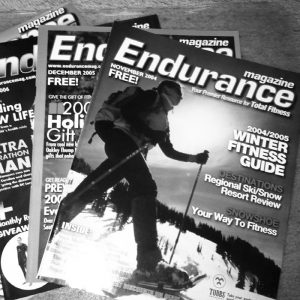
Figure 1: Endurance Magazine issues.
Our Beliefs About Business and Money: Why Create a Thriving Practice
There’s more to practice building than techniques. Our beliefs about business and money often color the way we build and maintain our practices. Perhaps the reason we came to this work – to help, educate and facilitate transformation – makes it feel wrong to look at it through a financial lens. Whether it’s that we don’t feel comfortable charging what we’re worth, or that we make unconscious decisions that hamper creating a sustainable practice, it’s worth taking a moment to consider our beliefs about money and what a thriving practice means.
Why would we want a thriving practice? Probably the first things that come to mind are to make a living or pay back the money we borrowed for training. These are excellent reasons, but keep asking the question and the list gets more interesting. Seeing lots of clients allows you to develop your skills. It gives you choices on how you spend your non-working time, including access to continuing education. It develops our profession so we can help more people.
Of course, developing your skills is a lifelong pursuit that can’t be crammed into a few weeks or months. Each of us has our own timetable for integrating experience, but, we also need a fair amount of input to optimize our learning curve. We need enough samples to allow us to compare, contrast, and develop our awareness. For example, when we learn to feel layers, we start out with a vague conceptual understanding. As we hold this, and then compare different types of tissue within and among hundreds of clients, distinctions emerge. Especially in the early years of a Rolfing® Structural Integration career, having access to many clients provides the extensive information needed to compare and contrast a wealth of observations, so you can develop your spectrum of touch, body-reading, and client-relation skills. All of these skills inform our intuition – perhaps the greatest Rolfing skill of all.
For some, beliefs about money obstruct efforts to grow a practice. If you get queasy when you talk about profiting from your work, it may be your definition of money. Consider that money is simply a convenient, transferable way we represent expended energy. A dollar bill is something we accept in exchange for our energy and talents, and we’ll give it to someone else in exchange for the same. Money is energy. Often, a full practice means a little extra money, and this gives us options. We can trade it for products or services that we don’t want to create or perform ourselves, or activities that might take a lot longer to perform than the time it would take to earn the same amount of money in our studios. A full practice allows you to have more of a say in how you use your time.
But the best part of having a full practice is that you can do as much continuing education as you like. Continuing education keeps you fired up about your work, and your clients feel it. If you take a lot of classes, your clients benefit twice: they receive work that is continuously improving, and from a practitioner who is enthusiastic about the work. There is no better practice-building technique than to nurture your love for this work. When you do, people feel it, they refer to you, your practice keeps growing, you have more options . . . . You get the point.
When you have a practice like that, you’re helping all of us. Some of you have worked on clients who have had amazing Rolfing experiences. Then those clients talked to their brothers, mothers, or friends in my area and they called me. Thank you! I get to repay the kindness when I help clients find some of you. Thriving practices are a way to make our work more available to more clients.
Profitable practices equate to much more than dollar signs. Full practices provide the lab where we hone our skills, add flexibility and options to our daily lives, allow us to learn more and stay excited, and grow our profession as a whole.
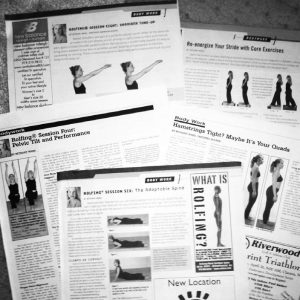
Figure 2: Articles on the sessions of the Ten Series and other topics.
hit the stands. My suspicions were further supported one month when I included a coupon in my ad. To my amazement, new clients mentioned and even brought in my article – but not a single one clipped the coupon or asked for the discount!
Additionally, an article takes up more visual space and hold attention longer than an ad. The public tends to view an article as relatively unbiased – especially if you give the reader something he can use (more about this below). I found out later that there are printed, local publications that are full of health articles that seem unbiased, but in many cases the authors pay to be included. This is also the case for some call-in radio shows. These outfits have you provide all the content while expecting you to pay them a fee, because print and radio communications bring credibility. People believe what they read and what they hear. I turned down a paid radio show opportunity and have never paid anyone to place an article. In my experience, journal and website editors are often desperate for good copy. If you are willing to look a little harder, and if you provide reliable copy, I think you can find good venues. Every article is worth several costly ads.
Writing Articles That Build Your Practice
Target your market: If you want your articles to bring you clients, make sure you’re writing for a publication that gets into the hands of local readers. A local, printed publication may reach more potential clients than a larger publication with a wider readership. With online articles this is different, but still make sure your intended market is included among its readers. Of course, if you can get an article in the New York Times, grab the opportunity. Articles in well-known journals create instant and long-lasting credibility when people visit your website. Also, don’t confuse writing for peer journals as Practice Building. Although there are a lot of great reasons to write for these publications, they’ll bring very few new clients to your doorstep.
Repetition is key: One article is nice, but regular submissions are infinitely more valuable. If you provide good content, readers will start to look for you. Even if they don’t read your articles, they’ll have a sense of the kind of material you write about and start considering you as a specialist in your area. They may not need you now, but they’ll remember you in the future. Even better, they’ll know that you always write something in a particular journal and they’ll know they can find you there. Even if you don’t consider yourself a writer, you might consider a small “tips and techniques” piece. Maybe you only write one hundred words, but you teach something each issue about posture or body use. Maybe you’re artistic and you’d rather create a comic. The key is that you find a venue where you keep showing up, you teach something, and your contact info is listed.
Educate and inform: If you write articles that feel like a long advertisement about Rolfing SI or your services, you’ll lose your audience. If you’re going to have a regular presence in a print or digital magazine, you have to commit to educating readers. Motivational speaker Zig Ziglar said, “You can have everything in life that you want if you just give enough other people what they want.” As a Rolfer, you have an enormous amount of information that can significantly improve people’s lives, and you’ll probably be sharing information that is completely new to them. Write about the fascial matrix, tensegrity, why the foot should be flexible, incorporating movement concepts, better sitting, the iliopsoas, scar tissue, viewing the body as system – whatever you’re interested in at the time. Explore one concept; keep it short and avoid Rolfing jargon. Suggest an exercise so the reader can bring it into her experience. In each column, I taught one concept. Say I discussed hip flexors and shared something interesting – e.g., how a tight rectus femoris can contribute to tight hamstrings – then I’d discuss how this is relevant for my athlete readership, and then provide a stretch or experiential exercise that readers could try on their own, like how to make a traditional quad stretch more effective, showing pictures of me doing it both incorrectly and correctly. My conclusion would mention other techniques and modalities people use to address this area, such as foam-rolling, acupuncture, and bodywork. I never directed readers to call me or suggested that Rolfing SI would solve all their problems. I wanted my readers to get a better understanding about their bodies. A simple byline at the end of each article stated that I was a Certified Rolfer who worked in the area and provided my website and telephone number. We don’t have to always sell ourselves directly. Write from a place of wanting to share and people will find you to learn more. Of course, make sure you can be found easily on the Internet, and that all of your materials (website, brochures, cards) have contact info that’s easy to find.
Include photos: Your article will get more attention if you include images whenever possible. Robert Schleip, PhD, is one of our peers who excels at making fascia research accessible. He always reminds me that although creating pictures may require 25% or more of your writing time, images are responsible for the majority of your exposure. When it comes to images, the payback is well worth the effort.
Conclusion
A well-researched and well-written article lends credibility to you as a practitioner and further enhances the way our field is perceived. It also improves the way you think and speak about the work. When you’re spending untold hours meeting your deadline rather than going out with friends, remember that writing is self-imposed continuing education. In terms of both personal and professional development, I haven’t found a better return on investment.
Bibliography
Grodzki, L. 2000. Building Your Ideal Private Practice: A Guide for Therapists and Other Healing Professionals. New York: W.W. Norton & Co.My Favorite Practice-Building Secret[:]