
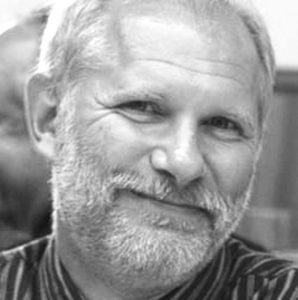
Allan Kaplan
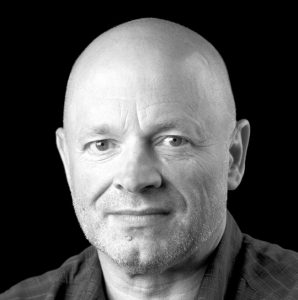
Peter Schwind
Allan Kaplan: So, I’m glad to see you. Just to set a general context of things, how did you come to become interested in Rolfing Structural Integration (SI) and how long have you been practicing?
Peter Schwind: I’ve been practicing now for thirty-seven years. Before I was trained in Rolfing SI, I had been in contact with the work already over a period of let’s say four or five years. I worked at a center for psychotherapy during the time of the so-called Human Potential Movement.
AK: You have a degree in psychology, don’t you?
PS: No. I have a degree in philosophy. In those days, you were able to train as a psychotherapist if you had a PhD in philosophy. Or if you had a PhD in theology, you could also enter psychotherapy training. So I got into psychoanalysis first, and then all the emotional therapies, and started training with a psychoanalyst for three years in Munich. Got in contact with Gestalt therapy, Bioenergetic Analysis, Primal Therapy [aka Primal Scream], Reichian therapies. It was the seventies . . . Lots of new ideas. Sometimes not that realistic but full of adventures.
I was on the way to become a psychotherapist when I had the chance to hear about Rolfing SI the first time. It happened through my Mexican colleague, Armando, who was also on the way to become a psychotherapist. He was a mathematician originally and quite a brilliant philosopher. He had traveled for three months’ training, sort of continuous CE, to California, and he came back and told me about Rolfing SI. He was so fascinated. His reports stimulated me to make the suggestion to our psychotherapy center in Munich that we invite his Rolfer. He came. He stayed at our center. He lived there with his family for quite a long period, and he did the ten sessions with, I remember exactly, ninety-four of our clients.
AK: Oh, my gosh!
PS: He did a lot of Rolfing sessions. Most of the people, more than I think ninety or ninety-one people, were totally enthusiastic about his work. He was one of the very early Rolfers, he had studied in Ida’s first class and in her two Advanced Tranings. His name was Lloyd Kaechele. In those days he lived in Topanga Canyon.
AK: Oh! I knew him in Japan.
PS: Yeah. Later on he lived in Guam. He was a great guy. Originally he worked as a scientist for NASA. He had met Ida by chance at a breakfast place. She was sitting next to his table and they started to talk together. After that talk he skipped his well-paying career at NASA and became a Rolfer. A brilliant man. I think the experience of the first ten hours with him had a tremendous impact on my physical and psychological well-being. I still remember how he performed the traditional pelvic lift. It was an almost transcendental experience to feel, how something inside the spinal channel and inside the cranium released. Later I understood that he was able to release the dura mater by doing an old-style pelvic lift. During those days I had no idea that there is something like an envelope of the spinal cord and the brain. Nevertheless – the experience was – for me – of a unique depth. Today it reminds me of William G. Sutherland’s concept of the pelvic lift, that he had taught during his first course about craniosacral osteopathy. We had an exchange of letters all the way up to Lloyd’s death.
AK: That’s fascinating. I met him in Japan and I actually did a session on him there, many years ago. So, you were inspired to become a Rolfer, and then launched on a long career. Who were your influences along the way and what was your vision of Rolfing SI for yourself?
PS: When I look back, I remember one experience. In those days we had two Basic Training phases, the so-called auditing and the practitioning. I did my auditing with John Lodge as my teacher and Charles Siemers from LA was a brilliant assistant. John Lodge was a very, very serious and impressive, colorful personality who had done very important things in his life. He worked as an actor for a TV series but also in movies with great Hollywood people, like for example Greta Garbo. He was a pilot and he bombed the German city of Frankfurt into ash and fire as a bomber pilot. He was a great painter and painting instructor. He had prepared for the class that I audited for almost a year. He took it very seriously. He had shut down his practice for a year to collect all the notes from the early teachers, to collect all the notes from Ida’s classes, and he did a great class.
At the end of the class, he took me aside and said, “Listen, Peter. You are different. You are from Europe. There is only one teacher who will be able to teach you.” The class was full, but those were days of political and administrative incorrectness [chuckles]. So he asked the administration to remove one person from the class he was talking about – a class in Santa Fe with Jan Sultan. He said, “You need to study with Jan Sultan.” He did me a great favor, because the atmosphere of studying with Jan in Santa Fe was completely different from the atmosphere in Boulder. It’s not that I want to put down the Boulder experience: it was great, and I enjoyed it tremendously, but we were basically working on healthy teenagers as models. With Jan’s work, I entered a different world. He took some of us aside, he showed us quite a few techniques that were not allowed in Boulder in a standard class [more chuckling].
He inspired me, with his incredible manual creativity, to really fall in love with Rolfing SI from another perspective. Not only from the perspective of human potential, but from a perspective of good old American bone-setting. The community in New Mexico didn’t have that much money and when people were in trouble they appreciated if you could help out them with their back pain, with their damaged knees. Jan’s model for the class was a mercenary soldier. He had been a professional boxer before that, then he went to fight in Africa. This guy had been blowing up bridges every day, had been tortured, had really been to some of the dark edges of life. Jan, in his work with this guy, taught me many things that I still feel grateful for nowadays.
Jan was not the only one. When I left the class, I visited Michael Salveson in Berkeley, and Michael connected me with Peter Levine. I had the chance to stay for two weeks with Peter at Esalen. We started a dialogue that was continued many years later, when Peter came to Europe to teach Somatic Experiencing®. As for Michael, he started with me, I would say, on an intellectual and conceptual level, an exchange of ideas that was like the other side of the practical door that Jan opened for me as an incredible craftsman and tinkerer.
Michael was and is always a lesson for me whenever I want to think and rethink our concepts. We started a friendship through the connection of his European wife, Georgette, that later led to the first European classes. I organized these classes when I was the European representative of the Rolf Institute®, only responsible to Richard Stenstadvold and the Board of Directors – a representative who could do whatever he liked to do, like a Bavarian king in a tiny little kingdom of Rolfing SI in Munich!
AK: Oh boy . . . Then after that initial period, you struck out and studied with a number of different people. You spent time with Dick Demmerle? [Editor’s note: Dick Demmerle, one of Ida Rolf’s sons, was a Rolfer who lived in Switzerland.]
PS: A considerable amount of time. I think that the instruction I got from Richard Demmerle was a meaningful continuation of the beginning times with Jan and the talks with Michael. Richard Demmerle’s way of doing body reading was a milestone for me. I traveled over a period of two years to Zurich to spend time alone with him, and with incredible love and care he really helped me to develop a very significant capacity of seeing, to figure out that there are only maybe two very deep places of holding in the organism. This is still a keystone for me today. There are two, maybe three, sometimes there is just one place. I started to understand that those significant places are a dynamic, three-dimensional reality. I realized that it is not so much ‘lines’, it is not layers, it is, to quote our colleague Jeff Maitland, the reality of the spacious body. It reminds me of the osteopathic concept of the primary lesion.
I think Richard Demmerle inherited this vision from his mother. She trained him when he was a twelve-year-old boy. He tried to give that vision to me; he’d say, “Peter, look, it’s not that; it’s not that; it’s that. Now go and show me how to do it.” It was not without stress to study with him, but it was a great, great privilege. Peter Melchior once was at a workshop that I organized for the two of them in Munich, and afterwards he took me aside and said, “You know, Peter Schwind, this man, the son of Ida Rolf, he truly loves you.”
AK: That’s great. Then, after Dick, you became acquainted with osteopathy and also discovered Jean-Pierre Barral and Didier Prat.
PS: That was ten years later, the story with Barral. I was asked very early, after one year of practice, that I should prepare myself to become an instructor, and I should come very early to the Advanced Training. I did an Advanced Training with Peter and Emmett Hutchins very early, after one year of practice, and then I assisted Peter in several Basic Trainings. I assisted Emmett, Tom Wing, Peter, Stacy Mills, Jan – all those people in several workshops and classes. At the same time I had a good friend, a German MD, who had started at Kirksville in osteopathy – there were osteopathy schools in England, but not in Germany or France yet. He started to teach me some basic knowledge about joint function tests and all this kind of thing. We worked together for many, many years. That was my first contact with osteopathy.
Then, I arranged the first European classes that Michael Salveson taught in Europe, assisted by my friend Michel Ginoulhac (who some know as Vandan) from France. Michel and I stared to explore cranial work. And when I heard that John Upledger left the cranial academy, I immediately wrote and asked if he would come to Munich and teach a small group. He wrote that he had no time because he had just started his institute, but he sent one of his assistants – Charlie Swenson, a Rolfer who used to teach anatomy for us. I organized, I think it was in 1982, the first cranial class for us in Europe, with only seven participants: a chiropractor, a dentist, myself, Robert Schleip, and another two or three people. I continued my basic cranial studies together with one of the first French osteopaths, who practiced in Munich. No school, no college, all unofficial and one-on-one.
Then, later, I got in contact with Lawrence Jones and studied two weeks with him about his Strain Counterstrain method, but I was still, I would say, a very classical Rolfer. Very, very faithful to that what Emmett had taught – to not do too many other things. The truth was, Emmett was incredibly supportive of any kind of innovation I was trying to do. I was really a bloody beginner who had no idea, but he supported me in the most outstanding way, and we had a fantastic dialogue.
So most of it I think I learned based on the great practical knowledge of Jan Sultan, and also much of what is important for me nowadays I learned during endless evenings with Peter Melchior in the Bavarian beer gardens. I assisted him in two Basic Trainings, then another with Stacy Mills. Then, later, I assisted Jan in two Advanced Trainings. Then I finally got to know my great friend and creative co-teacher, Jeff Maitland, who taught two other Advanced Trainings with me. Because of the philosophy background that we share, that’s another very, very important piece. And all my studies happened in a dialogue with my Swiss friend Hans Flury. The clarity – and productive radicalism – of his thoughts about structural integration were another milestone. Some articles of his journal – Notes on Structural Integration – are essential for all my teachings nowadays.
So I would say that I had a lot of influences, from teachers, from colleagues like Bill Smythe, but to tell you the truth, it was just the concepts of Ida, again and again, that kept me busy . . . and I tried to keep it as pure as possible. Then there was my encounter with Jean-Pierre Barral that almost threw me out of the saddle – that was after ten years of practice. I have now been a friend and student of Barral over a period of twenty-eight years, and have assisted him almost every year on two or three courses. That has certainly influenced my work more than anything else. I believe that it is not so easy to connect his approach with classical Rolfing SI.
I think that the concepts of Ida Rolf and Barral are almost opposite to each other – at least at first glance. Ida Rolf worked far away from the deepest problem, trying to resolve the problem from somewhere else, saying, “Go where it ain’t.” Barral goes where it is, there, where we find the deepest motion restriction – right away – and does not let go until the whole organism responds. What I try to do is to bring these two different perspectives, these two different approaches, together. That seemed to be impossible for me for a long time. For a long time I thought I would have to say goodbye to Rolfing SI. The osteopaths always wanted to make a real osteopath out of me. They wanted to found a school with me, you know, but finally we decided I wouldn’t do it.
Barral once told me, “You know, Peter, there is no doubt that Ida Rolf was very good, but nobody knows what she was doing. We only have interpretations of that.” I got quite different interpretations from the teachers of the first generation, but somehow Barral’s statement gave me, for the first time, the freedom to go for my own interpretation and to stimulate in the brains and in the hands of my students and colleagues their own interpretation of the work of Ida Rolf. For a long, long time, for twenty years, I only taught Rolfers. Jean-Pierre told me once, “You have an ethical obligation to teach your practical knowledge, which is not necessarily classic Rolfing SI. You teach that to everybody who wants to study with you.” That has given me a lot of freedom.
AK: That’s fascinating. It really gives an interesting perspective on the work itself. I think what you’ve said is very valuable. These days, what do you feel is the most valuable dimension of the manual Rolfing work? Where is your work, and where do you see it going?
PS: For me personally, it is important to underline all the time that the work has two dimensions. One dimension helps the person in a way that is very personal to his or her identity. For example, it may make a musician play better. It may make a person more at peace with himself. So it’s things that are not true for all people but are true for some people, and it’s very personal. I sometime hesitate to talk about this.
For example, I have a client who is a young musician, a conductor. I originally worked with him because he couldn’t raise his arm anymore. That was not such a big problem to resolve, but then he asked me, “Could you help me so that I conduct differently? So that I conduct like so and so” – a famous conductor from Germany. I said, “You know, it takes a while but we can try and do that.” So I studied how this famous conductor, the old one, conducts. But how do you do that with your hands as a Rolfer? How do you make another conductor out of a young American? That’s a big, big challenge. He traveled to Europe a few times for that, and we are on the way. So that’s a personal thing.
The other dimension, for me, is the potential of Rolfing SI, like other manual disciplines also, to do what bone-setters were doing: you just offer solutions for simple – and sometimes severe – physical problems. We cannot make miracles happen all the time, but if you cannot raise your arm for half a year, if you cannot get into your most beautiful Italian jacket anymore, you will start to appreciate this second dimension of Rolfing SI. This dimension, the so-called fixing things, was almost forbidden during the old days of our discipline. I always thought that fixing things is an honor and it is an obligation. I don’t want somebody messing around with standard Rolfing SI on my personality if he is not even able to fix my knee – do you know what I mean?
AK: Right.
PS: Some people are more talented in one dimension or the other, but for me both dimensions are very, very essential. It is simply important that we understand that the old Rolfing SI was focused too much just on the fascia of the muscles. There was very little understanding from the membranous subdivisions inside the thorax, inside the cranium, even inside the extremities. If we wanted to work with the interosseous membrane in the lower leg, we would make the sessions longer or push harder, but we could push for another twenty years on the lower leg and never get the interosseous membrane to open, unless we interact in an indirect way with the inherent tension of forces of that very dense tissue.
So what is important for me in the manual part of our work (the movement part is still another dimension) is that we don’t lose our identity. There are two ways to lose our identity. One way is fundamentalism and orthodoxy, what I like to call ‘Recipe fetishism’. That’s one way to destroy Rolfing SI. The other way to lose our identity is to add different modalities of work that have nothing to do with the authentic concept and the typical quality of touch of our discipline. This is my understanding, and I feel absolutely comfortable that some of my colleagues see it completely differently. It’s just my view that these are the two ways to destroy Rolfing SI, and I would rather not see it destroyed. I would rather see it refined within its own capacity.
AK: Yes. What do you see being a relationship between Rolfing SI and psychotherapy?
P SI t ra td a w o r l d – f a m o u s psychotherapist who had her Rolfing sessions under Ida personally, way back, and we have been in dialogue twenty-six years or more. I think that there is no doubt that Rolfing SI has an underlying psychotherapeutic dimension for some people, and that’s why we have to apply our approach very, very carefully. Of course, when we do bodywork we get in touch with more than the body. And we make it easier for the soul, if we are able to treat the physical reality in a good way. Some of my colleagues are better trained in psychology than I am and they may do something that is close to body-psychotherapy, but I always see a danger – because the body has so much its own dynamics and it’s so complex, when we go too much into the psychological direction, I lose some of the refinement on the physical level, which is part of what characterizes Rolfing SI.
And it’s the same for any other modality that we try to add on. I had to say goodbye to psychotherapy after five years of study, because I realized that Rolfing SI is its own field and I really had to focus and had so much to learn. If I want to cross that bridge from the body all the way over to the soul, it’s a very, very different field, it’s a very huge field. I probably need to study that much more than I studied Rolfing SI to be really comfortable with it.
AK: How about movement? How do you involve that in your practice? You were talking about working with the conductor. Was that more movement oriented? Or how do you approach that sort of thing?
PS: Well, first of all, I think if we do manual work intelligently on a person, we can use active micromovement or other motions of the client. We can actually use the person’s awareness. I think a lot of movement work can be done without teaching movement. That’s the first thing. Then the other thing I must say is that I was very, very impressed with the contribution that Hubert Godard made to the whole movement concept around Rolfing SI. I went through a whole series of workshops with Hubert. We co-taught the sessions four to seven of a Basic Training a few years ago. It was a privilege to study with such a fine, intelligent, and creative person as Hubert. I feel my understanding benefitted a lot from working with Hubert. And I do include some of Hans Flury’s ideas about ‘Normal Function’ in my work. I am not very good at it, but I do not want to miss this valuable movement work in my everyday practice.
My own – very small – contribution to movement work is many times a sort of mini-session where I try to watch clients in their everyday activities and give them little cues. Or I send them to a movement teacher. I must say that my own history with movement is more rooted outside of our community because I have been studying with very different schools – first oriental martial arts, later different styles of Tai Chi. I’ve studied Tai Chi for more than forty years now with different people, and practice very regularly. For me, this adds to that what I do manually. I’m now going to teach for the first time a two-day workshop, not movement, let’s say exercise, for the Munich Group in 2018. It’s a two-day program of how to do movement work on yourself for your organs. It’s based on certain oriental exercises. I realized not everybody in the West wants to study Tai Chi or yoga for forty years, several hours a day. I always asked myself what Westerners can benefit from, people who do not have much time. My workshop will be called “Fascial Training for the Organs.”
AK: What are your interests these days? I know you have written a number of books and you’ve got a brand-new book out.
PS: This book is my favorite. It’s a popular book – meaning it’s for everybody. It’s a little bit in the tradition of Oliver Sacks, the neurologist. I have always adored his writings and had been too shy to try to write something in that direction. Finally, I had the courage. The book is called The Croissant Inside the Brain and it will be published in the United States in 2018. It’s about the work that Jean-Pierre Barral does on the human brain and that he taught me eight years ago. He hasn’t yet taught a workshop about this, but he will start in two years to teach it. He told me that right now he doesn’t have enough knowledge about the brain to talk about it, but he gave me individual instruction on how to do this work, and I’ve experimented with it now for almost eight years, to try to apply this work on people who are victims of severe strokes and have lost their capacity to talk, or who are half paralyzed. The book is really dedicated to Barral’s great creativity. It’s a sort of biography of our friendship at the same time. It is a case study of a man who had lost the capacity of speech through a stroke, and in how he’s able to talk again after the two of us together treated his brain. It’s a very exciting story. I try to be very modest, with a lot of doubts about me, ourselves, our approach.
The book was published in Germany a year or so ago, and it has brought quite a few people to me who are in a desperate situation of life. So that’s the challenge and that’s my greatest joy at the moment, to work with people who have severe brain damage. Of course I studied quite a bit the thinking of Moshe Feldenkrais, and had great Feldenkrais® people work on my own body. That has influenced me a lot. Basically, I try to understand what Barral’s work is on the brain. A part of what I do in practice may be a misunderstanding, but I hope it may be a productive misunderstanding.
AK: Well, let’s hope so. I know scoliosis was a big interest of yours in the past. Are you still charging ahead with that?
PS: Oh yes. I’ve been invited a lot by scoliotic experts, clinics and so on, trying to liberate a new concept, a new typology of scoliosis. It is encouraging that my favorite idea – that most scoliosis has a very clear genetic disposition – was confirmed by some research in Japan last year, where they actually found a very specific gene that is responsible for the development.
AK: Oh, really!
PS: Yes. The truth is I was very disappointed about the results I had in the first ten years of my work with scoliotic people. Some of my first scoliotic clients I have now observed since they were teenagers many, many years ago. I have observed them over thirty-five years. I have tried to observe how the scoliosis develops in the membranous system of the newborn infant – when you cannot see anything on X-ray, where the spine is totally straight, but you still can see how the cavities inside the trunk or inside the cranium show the scoliotic pattern. I have tried to make clear distinctions of types of scoliosis that are, for example, related to a certain development, how the organs find their places inside the cavities of the embryo when the embryo is only like three inches tall.
I followed some of the babies from the age of four weeks up to the age of eighteen before I was ready to make some interesting conclusions. Maybe somewhere down the road I will be able to do more detailed writing about it. So far I have been teaching people in three-day special workshops how to treat scoliosis manually, how to help with exercises. I have also started a very intense dialogue with surgeons, because there are some scoliosis where after a certain number of years they go into total collapse and the heart gets so much pressure that one lung cannot function any more and you have to do surgery. I’ve started to take care of those people after the surgery was done, and that has also improved my perspective of what scoliosis really means. Because now the surgery has improved incredibly, there’s no rod anymore, they are just small units of titanium that you fit very well. It shows that the surgery can align the spine, but the surgery is not able to balance the pressure changes inside the cavities of the body. So it shows me again that scoliosis has very little to do with the spine and spinal curvature. Rather scoliosis is a genetically conditioned, individual solution to spatial, inner imbalances, which is not always productive. Sorry about these philosophical statements.
AK: No. It sounds to me exactly relevant.
PS: There are some other surgeons in Italy who do very interesting microsurgery at the end of the scoliosis, close to the filum terminale where the dura comes out towards the coccyx. It’s micro-interventions, and you have a tremendous impact on the dura. Anyway, it’s really an exciting adventure with scoliosis now, that started for me many, many years ago with my disappointment with the results of the standard Recipe for scoliotic people. Still, I tell you, the truth is I feel at the beginning. There is an international society for research with scoliosis. They’ve invited me all the time these past years, and I’ve never gone because I have the feeling it’s premature – I am still not able to make my statements clear enough. But I have enough practical experience now to start to bring more order into my thinking about it.
AK: Do you have you anything else you want to add for the readers?
PS: The only thing I want to add is that I feel so privileged that I could study with so many teachers: Jim Asher, Jan Sultan, Michael Salveson, Tom Wing, Emmett Hutchins, Stacey Mills, Peter Melchior – all those people of the first generation, and Michael Salveson especially. I hope I didn’t forget too many. Also, Louis Schultz as an anatomist and a Rolfer was important.
I could have done a few other things in my life. I won several scholarships very young, already in high school, to study at the Mozart Conservatory as a violinist, and I did a few things that I enjoyed tremendously when I was a young man. I am still happy that I said goodbye to those different professional worlds that I was just getting involved with as a young man. Except to the world of music, that I did not totally say goodbye to. That’s perhaps the last thing I want to say. I just had an email from my colleague and friend, Harvey Burns, who is also an ex-musician – or a musician, because you are never an ‘ex-musician’. He shared with me a very beautiful statement that the singer Sting made. It has something to do with silence. I’m sure most of us know the Fifth Symphony of Beethoven, the da-da-da-dum at the beginning. What Sting said was that the pause after those first four tones is probably what’s most important, what’s revolutionary in what Beethoven did. Before him that sort of meaningful pause didn’t exist in that way. What I want to share is that the silence during the session is what is most important. The moment after we did something with our hands, and the moment we withdraw our hands and wait in silence, may be the most important.
AK: Yes. Thank you very much.
PS: Thank you very much for the great questions.
Peter Schwind has worked in private practice in Munich, Germany since 1980. He teaches advanced Rolfing classes for the European Rolfing Association and Fascial and Membrane Technique at the Munich-Group (www.munich-group.com) and for postgraduate students in the field of osteopathy. He is also an instructor for visceral manipulation at the Barral Institute and the director of Munich-Group-Media (www.munich-group-media.com), dedicated to produce teaching DVDs about the work of Jean-Pierre Barral.
Allan Kaplan became a Certified Rolfer in 1988. Since then, he’s done the Advanced Training twice, assisted both Basic Rolfing Trainings in Boulder and visceral manipulation classes with Didier Prat, DO, and studied osteopathy in Canada. He now continues his visceral manipulation studies with Jean-Pierre BarrNavigating Between Technical Refinement and the Vast Dimensions of the Soul[:]