Capa_Journal_August_2021_INTERACTIVE_UPDATED
HACK, Lina
PORGES, Stephen W.
Structure, Function, Integration. Journal of the Dr Ida Rolf Institute. August 2021/ Vol. 49, No. 2
Vol: 49
Pages: 18-25
Article year: 2021
ABSTRACT Polyvagal theory is reviewed in a short introduction, followed by a conversation with Dr. Stephen Porges. Porges’s history as research director with the Rolf Institute® (now the Dr. Ida Rolf Institute®) is discussed, as well as his body perception questionnaire, the term neuroception, and how Rolfing® Structural Integration can be polyvagal-informed.
Ver resumo
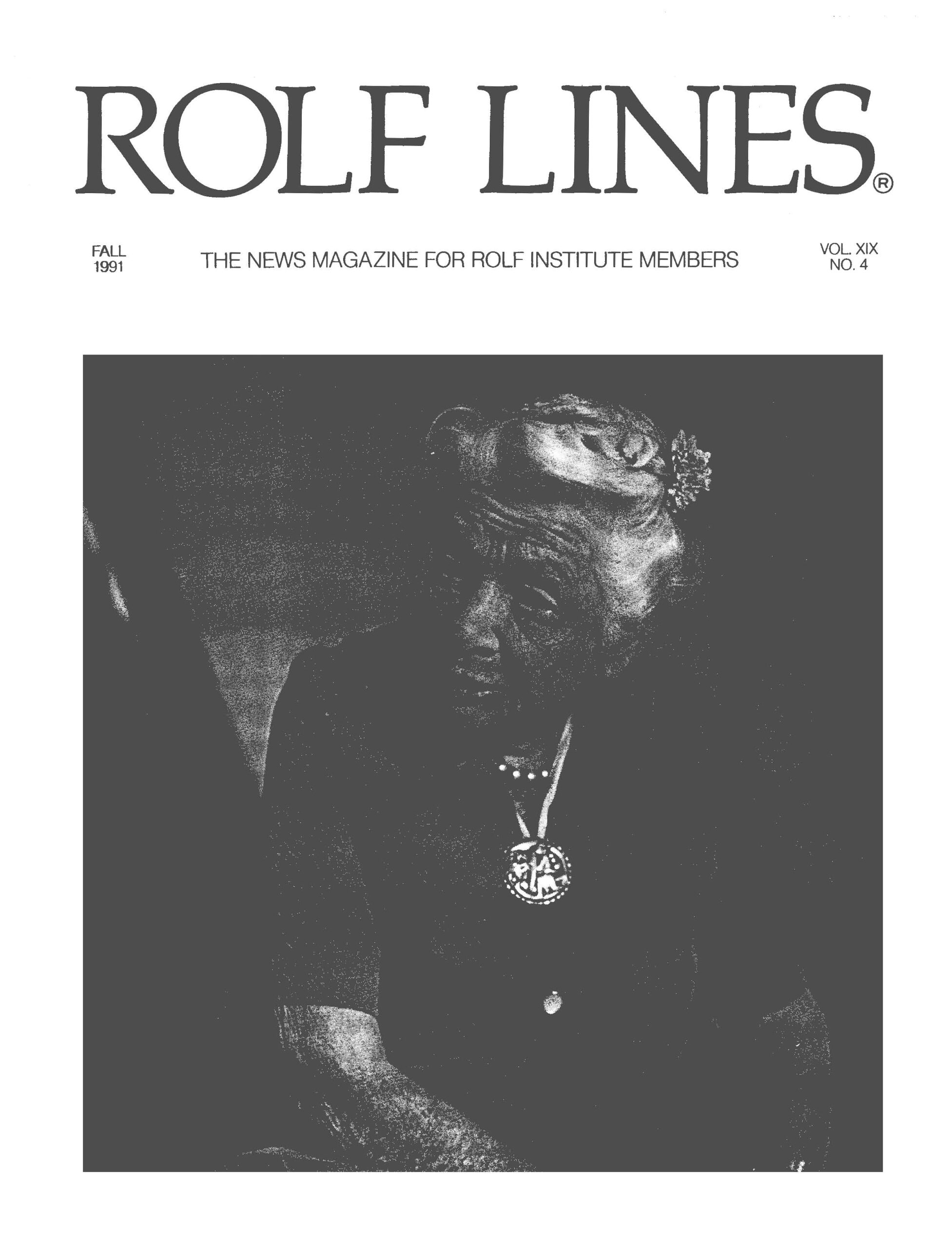
CAPA_R.L_1991-04-Fall
PORGES, Stephen W.
ROLF LINES - Vol XIX - Nº 04 - FALL 1991
Vol: XIX
Pages: 37-38
Article year: 1991
Ver resumo
CAPA 1992-03-Summer
PORGES, Stephen W.
ROLF LINES, VOL XX - Nº 03 - Summer 1992
Vol: 20
Pages: 43-44
Article year: 1992
Ver resumo
COTTINGHAM, John T.
PORGES, Stephen W.
RICHMOND, Kent
Others publications and sources
Pages: 1364-1370
Article year: 1988
From “Physical Therapy”From “Physical Therapy”From “Physical Therapy”From “Physical Therapy”From “Physical Therapy”The effects of soft tissue manipulation (Rolfing method) were evaluated on young healthy men using two dependent variables: 1) angle of pelvic inclination and 2) parasympathetic activity. Pelvic inclination was assessed by determining the angle of standing pelvic tilt (SPT) with an inclinometer. Autonomic tone was assessed by a measure of cardiac vagal tone (amplitude of respiratory sinus arrhythmia) derived from monitoring heart rate. Thirty-two subjects, pre-selected for exhibiting an anteriorly tilted pelvis, were randomly assigned to either an Experimental Group (n = 16) that received a 45-minute Rolfing pelvic mobilization session or a Control Group (n = 16) that received a 45-minute control session without manipulation. Dependent variables were assessed before the 45-minute session, immediately after the session, and 24 hours later. Comparing pretest to posttest assessments, the Experimental Group demonstrated a significant decrease in SPT angle and a significant increase in vagal tone. The Control Group did not show significant pretest or posttest differences. The results provide theoretical support for the reported clinical uses of soft tissue pelvic manipulation for 1) certain types of low back dysfunction and 2) musculoskeletal disorders associated with autonomic stress.
Ver resumo