

ABSTRACT To honor Vivian Jaye’s life and passing, Jane Harrington, her longtime Rolf Movement partner and good friend, was asked to write about Vivian’s contribution to the Rolf Instite® (RISI), now the Dr Ida Rolf Institute® (DIRI). She, in turn, asked DIRI faculty Pedro Prado and Libby Eason to share their experiences with Vivian.

Vivian Jaye was the only member of the Rolf Institute who was not a Certified Rolfer™. She focused her passion and brilliance on the movement work. One of her quotes, my favorite, is particularly famous in our community, and exemplary of the work: “The way you walk across a room is the way you walk through life.”
With Vivian’s death, I lost my best friend and teaching partner of almost thirty years. We met in 1979 at RISI’s first movement admissions class, and were members of the first group to be certified as movement practitioners.
We began teaching because we wanted to spend more time together and explore the work more deeply. We were like a song- writing team: Vivian did the lyrics, and I created the melody – and sometimes we reversed roles. In writing about Vivian’s contributions to the movement work, I find I can’t separate her contributions from ours as a team. When we were creating new curriculum, Vivian began pacing and I wrote. I would capture the ideas we were exploring, and then about 80% of our brilliance would be discarded as we clarified the class material (Figure 1).

Vivian was a dynamic, charismatic teacher; her work often appeared to be magic, and there was that magical touch! It was the hours of discovery as we worked together, clarifying, discarding, and organizing that created this magic.
Going back to our training. It was the perfect format: our mornings were spent in a Basic Rolfing Structural Integration class with Peter Melchoir, and in the afternoon we took the concepts and understanding of each of the ten sessions back to the movement group. Our movement instructors were Heather Starsong and Megan James (who is no longer with us). This format gave us a very clear understanding of the conceptual and structural/functional aspect of the basic series.
At that time, the movement work was in its beginnings – being built around what is often called Ida’s Yoga. These five to seven movement sequences can be used while working with the client and are also something the client can work with and explore as ‘homework’. Wanting more than mechanics, Vivian and I took these basic sequences and expanded them into a full exploration of how it feels to live within a body.
The authentic intimacy of our friendship gave depth and texture to our teaching. Our relationship showed in our work; it was never flat, always inviting depth and a richness. Our work was holistic, including all aspects of the person.
Vivian adapted the Lakota Indian medicine wheel for our purpose. It became The Circle of Being – who we are is a mix of our beliefs, emotions, structure, and spirit so any pattern we are dealing with will reflect all aspects of the person.
We began teaching the movement certification classes in 1988. In the early 1990s, the Advanced Faculty created the Principles of Intervention, which took us out of techniques and into concepts, allowing the movement work to integrate more fully into the Rolfing training.
Over the years of working, Vivian and I created key concepts that defined our work. These concepts hold the base, values, and focus of our work. Here are a few:
As many of you know, Vivian was born without a hip socket on one side of her body. This lifelong physical issue highlighted the adaptation principle.
When working with a client, she was always probing to find the purpose of a given pattern and then looking for options. This gave her a passion for the work and the tenacity to stay with a client and his/ her experience until the client understood.
For both of us, presence and depth in the work was essential. For the client to embody, it requires a felt sense of the pattern and how it is serving the person – or not. This inner knowing comes before options for change.
In a session, we usually began with analysis while the client was walking – asking questions and inviting awareness. Often, we did the body of the session with the client on the table, calling for movement as we used indirect touch to ‘remap’ the habitual movement patterns. This was then taken into sitting, standing, and walking with cues taken from the client’s language as s/he integrated into activity.
Vivian and I created essential aspects of the movement work, and it was through our work that movement became a part of the curriculum. We developed the ‘Principles Week’ and the integration into the Basic Training. We also designed the first movement certification program for Rolfers.
Libby Eason’s Thoughts
Vivian Jaye was a brilliant, intense holder of the transformational power of movement work. She brought many years of study and inquiry into what it means to be human, to share one’s humanity, and to be profoundly present to others in their process of change.
She was a shaman, a healer, a teacher, and held many other roles. Her presence was always an inspiration to look deeper into the nature of reality and our role with the ‘other’ in our practices. She was a living testament to the power of personal work, spiritual work, and bringing one’s total self into the process of the work.
Together with Jane Harrington, she created the movement series as a way to elicit all of the goals of the structural work but using movement. There was integrity in the inquiry that led them both to work many long hours and produce a body of movement work that formed a foundation for the work we know today as Rolf Movement Integration. I am forever grateful for the impact she had on the community, and on me, personally, in the process of studying movement – in awareness, in practice, in teaching.
Vivian and Jane were a spectacular teaching team. Jane perhaps more practical and straightforward with her teaching while Vivian was more focused in the metaphysical – though both brought magic to the work, and awareness and meaning.
I especially appreciated watching Jane work once, during my movement training. In a profound moment, I understood that intimacy and boundaries are both equally and coequally possible, and even required, for a powerful, transformative process to take place. It is the essential alchemical element in any therapeutic process. When I am open to the client, as much as s/he is open to me, it erases any possibility of improper power dynamic. I feel, am empathetically attuned to, the client, partly by my availability to be equally open in my humanness, for the client to sense my authentic presence and willingness to be vulnerable. This I learned from the dynamic duo: Vivian and Jane.
Thank you, Vivian, and thank you, Jane.
The way you walk across a room is the way you walk through life.
– Vivian Jaye
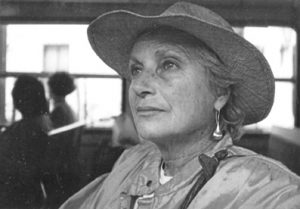
Figure 2: Vivian Jaye in the late 1980s.
Pedro Prado’s Thoughts
I had the privilege of being Vivian Jaye’s personal friend and a working colleague. The movement work was a natural fit to the Brazilian way of seeing the work. We were members of the RISI faculty at the same time and shared the same anxiety: to have the movement work survive the tendency of the structural work to undervalue its nature.
We needed to bring its value to the perception of all and then to be able to launch projects that involved the movement work. One of them happened in Brazil, where we had the vision of Rolfing as a methodology that had structure and movement as one thing, not two discriminated methodologies. We believed that a good professional should have the understanding of Rolfing in a way that encompassed both approaches and not be specialized in one or the other.
With this point of view, we dreamed that they should be taught simultaneously. A first attempt had already happened with the Combined Studies program, but there, the two techniques were simply juxtaposed, not integrated. Our dream was to train a professional who could weave them according to the needs of the process of the client. Therefore, we needed to develop a training that would carry both these approaches simultaneously.
It was when the Principles of Intervention came to light that we found a way to bring this vision to reality, and that helped also to make the movement work more reliable. The principles were the common element that brought structure and function work together – Independent from each other, and yet at the same time together, permeable. With the understanding and the mastery of the principles, one could ground nonformulistic reasoning to whatever strategy one would build, using either manipulation or movement work. Therefore, the creation of the ‘Principles Week’ (Rolf Movement lead-in week) to Basic Training was based in this vision, which ‘opened the show’.
Vivian dove into the creation of this approach. The curriculum in Brazil evolved to carry these approaches in the same program. We proposed to teach and form the students to be able to carry a process based exclusively in movement sessions, or exclusively using the classical ‘Recipe’, and also interweaving approaches. Of course, each one tempered with the vision of the other and adapted to the needs of the client. Vivian made many trips and generously gave her time and knowledge to this job. We’d experiment and put shape to the curriculum.
The adventure would continue in Boulder where we worked with the whole Rolfing Faculty, explaining, gaining the space for this pilot project (the Brazilian Educational Project – a dual certification), and facing the resistances. Vivian had actually moved to Boulder because she had this mission – to hold high the baton of the Rolf Movement work and to see the changes through.
Our friendship deepened, we enjoyed meeting and spending time together, sharing our spirit, creating in the work – and most of all enjoying each other’s company!
Jane Harrington is Emeritus faculty for DIRI after being on faculty since 1986. She was certified in Rolf Movement Integration in 1980 after years in the movement field. Jane taught Basic Rolfing Training and Rolf Movement Certification courses. Her passion is linking the movement work with Ida’s vision of our work. She is currently teaching a limited number of continuing education workshops.
Libby Eason graduated from RISI in March 1992, completed Rolf Movement training in 1994, and Advanced Training in 1997. She became an assistant instructor in 1998 and taught her first class in 2004. Among a variety of other continuing education endeavors, she completed a four-year training in the Feldenkrais Method in 2016. Libby was president of the Ida
Pedro Prado, PhD, is an instructor for the Advanced Training and Rolf Movement training. He also teaches Somatic Experiencing® throughout the world for the Foundation of Human Enrichment. He is a clinical psychologist and a former professor of somatic psychology, and is currently exploring the psychobiological dimension of structural integration in his practice, teaching, and research. Pedro has maintained a clinical practice in São Paulo, Brazil since 1981.
It’s not how deep you go, it’s how you go deep.
Dr. Ida Rolf, FounderMemories of Vivian Jaye[:]